
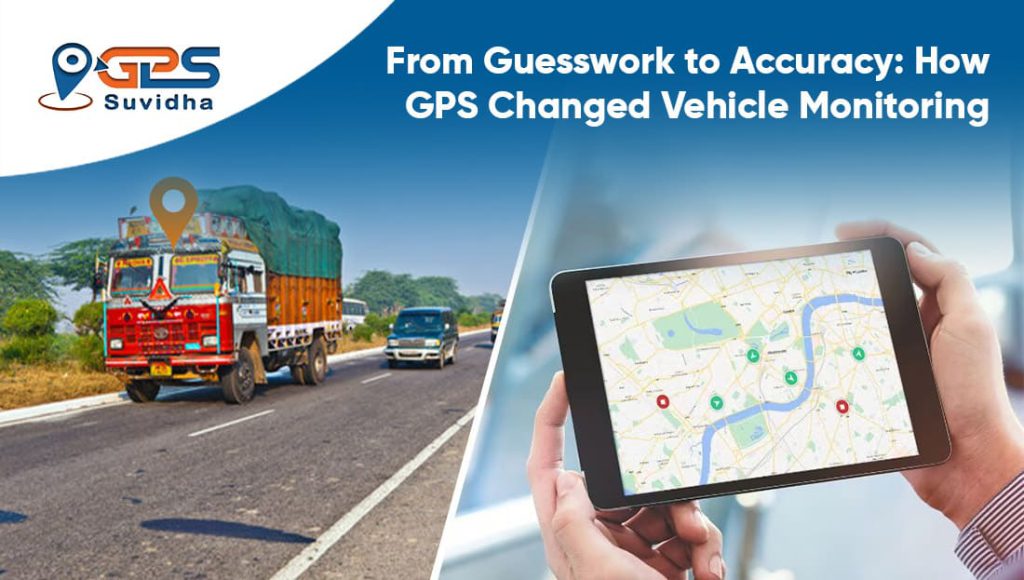
There was a time when vehicle monitoring was mostly based on guesswork. Businesses had to depend on phone calls, manual logs, and driver updates to understand where their vehicles were.
However, things changed completely with the introduction of GPS tracking.
Today, vehicle monitoring is no longer based on assumptions. Instead, it is driven by accurate, real-time data, which helps businesses and vehicle owners make better decisions.
Vehicle Monitoring Before GPS: A System Based on Guesswork
Before GPS technology, tracking a vehicle was not easy.
Managers often had to:
- Call drivers to ask their location
- Rely on handwritten logs
- Estimate delivery times without real data
Because of this, there was always uncertainty. There was no way to confirm the exact location or movement of a vehicle.
In fact, without tracking tools, companies faced problems like poor route planning, higher fuel costs, and delayed responses.
The Shift: How GPS Introduced Accuracy
The biggest change GPS brought was accuracy.
GPS works by using satellites to determine the exact position of a vehicle. As a result, users can see location, speed, and movement in real time.
Modern GPS tracking systems can provide location accuracy within 3 to 10 meters in most cases, making them reliable for everyday vehicle monitoring.
In more advanced systems, accuracy can improve even further using technologies like Differential GPS (DGPS) and RTK.
From Manual Updates to Real-Time Monitoring
One of the biggest improvements is the shift from delayed updates to real-time tracking.
Earlier, updates depended on drivers. Now, GPS systems automatically send location data every few seconds.
This means:
- You always know where your vehicle is
- You don’t need to rely on manual updates
- Decisions can be made instantly
Telematics systems today provide real-time vehicle data, including location, speed, and performance, helping managers monitor operations continuously.
Better Decision-Making with Accurate Data
With GPS tracking, businesses no longer depend on assumptions.
Instead, they get access to real data, such as:
- Route history
- Travel time
- Idle time
This allows better planning and smarter decisions.
According to industry insights, accurate tracking data helps improve efficiency, safety, and operational control.
Improved Efficiency and Cost Control
Accuracy in tracking directly improves efficiency.
For example:
- Better routes reduce fuel usage
- Real-time monitoring reduces delays
Without GPS, these improvements were difficult to achieve because there was no reliable data.
Challenges Still Exist (But Are Managed Better)
Even though GPS is highly accurate, it is not perfect.
Accuracy can be affected by:
- Tall buildings (signal reflection)
- Tunnels or underground areas
- Weather conditions
However, modern systems use advanced algorithms to reduce these errors and maintain reliable tracking.
Also Read:- The Hidden Problems of Vehicle Tracking Before GPS Systems
Why This Matters in India
In India, where traffic is high and distances are long, accurate vehicle monitoring becomes even more important.
Without proper tracking, businesses may face:
- Delays in delivery
- Increased fuel costs
- Poor operational control
GPS tracking helps solve these problems by providing real-time visibility and accurate data, which is essential in such conditions.
How GPS Suvidha Brings Accuracy to Your Vehicles
If we compare old tracking methods with modern solutions, the difference is clear.
With GPS Suvidha, you move from guesswork to accuracy.
It helps you:
- Track your vehicle in real time
- Monitor routes
- Access clear reports and insights
Instead of depending on manual updates, you get reliable data that helps you manage your vehicles more efficiently.
When Should You Move to GPS-Based Monitoring?
You should consider GPS tracking if:
- You want an accurate vehicle location
- You want better control over operations
- You want to reduce delays and inefficiencies
- You want data-driven decision-making
The sooner you switch, the faster you can improve your operations.
Want to Move from Guesswork to Accuracy?
If you are still relying on manual tracking or limited information, it may be time to upgrade.
With solutions like GPS Suvidha, you get accurate, real-time tracking along with easy-to-use tools that help you manage your vehicles better.
Instead of guessing, you start working with real data—making your operations more efficient, reliable, and cost-effective.
Frequently Asked Questions
GPS improved vehicle monitoring by providing real-time and accurate location data instead of manual updates.
Most GPS tracking systems are accurate within 3–10 meters under normal conditions
Because it depended on manual updates, phone calls, and estimated data instead of real-time tracking.
Yes. Accurate data helps improve route planning, reduce fuel costs, and enhance decision-making.