
If you manage trucks, one of the most important questions in your daily operation is simple: Where is my truck right now?
A reliable truck GPS tracking system in India can answer that question in real time and provide much more information, including route history, vehicle movement, overspeeding alerts, long stops, fleet activity, and, where supported by the installed device, fuel information.
For transporters and logistics businesses, GPS tracking is no longer simply about putting a vehicle on a map. It has become a practical tool for improving fleet visibility, monitoring operations, and making faster decisions.
What Is a Truck GPS Tracking System?
A truck GPS tracking system is a combination of GPS tracking hardware and software used to monitor a truck’s location and movement.
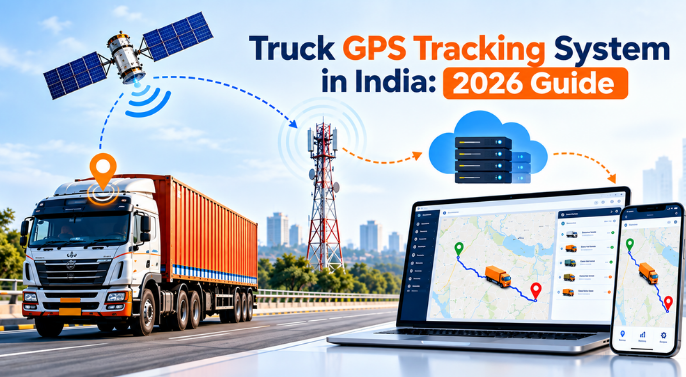
A GPS device installed in the truck determines its position using satellite signals. The device then sends available location and vehicle information through a communication network to a tracking platform. Authorized users can view this information through a web dashboard or mobile application.
In simple terms:
GPS device → Satellite positioning → Mobile network → Tracking platform → Fleet owner or manager
Modern truck tracking systems can provide much more than a live location. Depending on the device and software, businesses may monitor routes, vehicle activity, speed, stops, geofences, alerts, reports and fuel information.
GPS Suvidha’s truck tracking solution is designed around real-time fleet visibility, allowing users to monitor trucks from a phone or web-based system.
How Does GPS Tracking for Trucks Work?
A typical truck GPS tracking system works through four main stages.
1. GPS Location Detection
The installed tracking device receives signals from navigation satellites and calculates the truck’s location.
2. Data Transmission
The device sends location information and other supported data through a cellular communication network.
3. Cloud or Server Processing
The tracking platform receives and processes the information so it can be displayed in an understandable format.
4. Fleet Monitoring
The fleet owner, transporter or manager can access the information through a dashboard or mobile application.
This means a manager does not need to repeatedly call drivers for basic location updates. Instead, the fleet can be monitored from a central platform.
The exact update frequency and available information depend on the tracker, network conditions, configuration and tracking platform.
Why Is Truck GPS Tracking Important in India?
Indian logistics operations often involve long-distance routes, multiple stops, changing traffic conditions and large geographical areas.
Without digital visibility, fleet managers may depend heavily on driver calls, WhatsApp messages or manual updates.
A truck GPS tracking system provides a more structured way to monitor vehicle movement.
Real-Time Fleet Visibility
Managers can view multiple trucks from one platform instead of checking vehicles individually.
Better Route Monitoring
Route history can help businesses understand how trucks actually travelled and identify route deviations or unnecessary movement.
Faster Operational Decisions
If a truck is delayed or stops unexpectedly, managers can respond using available tracking information rather than waiting for the next manual update.
Improved Customer Communication
Accurate vehicle information can help businesses provide better delivery updates to customers.
Better Driver Monitoring
Overspeeding, long stops and other configured vehicle events can provide useful information for driver and fleet management.
Improved Fleet Utilization
Historical tracking information can help managers understand vehicle usage and make better dispatching decisions.
GPS Suvidha’s fleet-management information includes real-time tracking, fleet monitoring, route monitoring, route history, overspeed alerts, long-stop alerts, daily reports and fuel monitoring where supported by the installed device.
Key Features to Look for in a Truck GPS Tracking System
Not every GPS tracker provides the same capabilities. Before choosing a solution, consider the features that actually matter to your operation.
1. Real-Time Truck Tracking
The most basic requirement is the ability to see the current location of connected trucks.
A good platform should make it easy to identify active, stopped and moving vehicles.
2. Route History
Live tracking tells you where a truck is now. Route history helps you understand where it has been.
This can be useful for reviewing completed trips, investigating delays and improving future route planning.
3. Overspeed Alerts
Speed monitoring can help fleet managers identify potentially unsafe driving patterns and take corrective action.
4. Long-Stop Alerts
Unexpectedly long stops can affect delivery schedules and vehicle utilization.
Configurable alerts can help managers identify these events without continuously watching the map.
5. Geofencing
Geofencing allows businesses to create virtual geographical boundaries.
For example, a fleet manager could create zones around:
- Warehouses
- Factories
- Customer locations
- Depots
- Restricted areas
Entry and exit events can then be used for operational monitoring.
6. Fuel Monitoring
Fuel monitoring can provide additional operational visibility when the installed tracker and compatible fuel sensor support it.
Fuel information should not be assumed to be available from every GPS device.
7. Mobile Access
Transport operations do not stop when the fleet manager leaves the office.
A mobile application can allow authorized users to monitor trucks and receive alerts while travelling or working remotely.
8. Reports and Analytics
A useful tracking system should convert raw location data into understandable reports.
Common reports may include:
- Trip reports
- Route history
- Distance reports
- Overspeed events
- Stop reports
- Daily activity
- Fleet status
- Fuel information, where supported
What Are the Benefits of a Truck GPS Tracker for Fleet Owners?
A truck GPS tracker can help solve several everyday fleet-management problems.
Reduce Dependence on Manual Location Updates
Instead of repeatedly asking drivers, managers can check the tracking platform.
Identify Route Deviations
If a vehicle moves away from its expected route, the tracking information can help managers investigate the reason.
Monitor Vehicle Activity
Fleet managers can review when vehicles are moving, stopped or inactive.
Support Better Delivery Planning
Historical and real-time information can help businesses plan operations around actual vehicle movement.
Improve Accountability
Tracking records provide a digital view of vehicle activity that can support operational discussions with drivers and fleet teams.
Protect Valuable Assets
Location visibility can be useful when responding to unauthorized movement or other unusual vehicle activity.
The value of tracking comes from using the information to make better operational decisions—not simply from installing the device.
Who Needs GPS Tracking for Trucks?
A truck GPS tracking system can be useful for many types of businesses.
Transport Companies
Transporters managing multiple vehicles can use centralized tracking to monitor their fleet.
Logistics Companies
Logistics operators can use vehicle visibility to support dispatching and delivery coordination.
Fleet Owners
Owners can monitor truck movement without depending entirely on phone-based updates.
Distribution Businesses
Companies delivering products between warehouses, distributors and customers can use route and trip information for better coordination.
Construction and Heavy Equipment Businesses
GPS-based tracking can also be useful for monitoring vehicles and mobile assets used across different locations.
Small Fleet Operators
GPS tracking is not only for large enterprises. Even a small fleet can benefit when vehicle movement, delivery schedules and operating costs matter.
GPS Tracker vs GPS Fleet Management: What’s the Difference?
These terms are often used interchangeably, but they are not exactly the same.
| GPS Tracking | GPS Fleet Management |
| Primarily focuses on vehicle location | Covers broader fleet operations |
| Shows current location | Combines tracking with operational information |
| May provide route history | Can include reports, driver activity and utilization |
| Useful for basic monitoring | Designed for managing a complete fleet |
| Location is the primary data point | Location becomes part of a wider management system |
In other words, GPS tracking answers “Where is the vehicle?” while fleet management helps answer “How is the fleet operating?”
GPS tracking can therefore serve as an important data layer within a broader fleet-management process.
AIS-140 and Truck GPS Tracking in India
AIS-140 is an important term to understand when discussing vehicle location tracking in India.
AIS-140 specifies requirements for vehicle tracking and related systems, including technical requirements for tracking devices and emergency-related functionality in applicable deployments. MoRTH’s AIS-140 documentation includes requirements around GNSS, communication, secure data transmission and device durability.
There are also specific regulatory requirements for certain vehicle categories and use cases.
For example, the Ministry of Road Transport & Highways stated that vehicles in categories N2 and N3 carrying dangerous or hazardous goods were required to be fitted with an AIS-140 vehicle tracking system under the relevant notification.
In 2025, MoRTH also published a draft amendment proposing AIS-140 vehicle-location requirements for haulage tractors from October 1, 2026. Because that document was a draft rule, businesses should verify the latest applicable notification and state-specific requirements before treating the proposal as a universal current mandate.
Important: AIS-140 applicability depends on the vehicle category, use case, state requirements and current regulations. Businesses should confirm the requirements applicable to their specific vehicles before purchasing hardware solely for compliance purposes.
How to Choose the Right Truck GPS Tracking System in India
Choosing a GPS tracker should not be based only on the lowest device price.
Consider these factors before making a decision.
Check Hardware Quality
The device should be suitable for the operating environment of commercial vehicles.
Check Network and Connectivity
A tracker depends on communication connectivity to transmit information. Ask the provider how the solution handles network availability and data transmission.
Evaluate Software
A good device is only part of the solution.
Check whether the dashboard is easy to understand and whether important information can be accessed quickly.
Check Mobile Application
A mobile app is especially useful for transporters and managers who are frequently away from the office.
Review Alerts
Confirm that the system supports the alerts your operation actually needs, such as overspeeding, long stops, route deviations, ignition or geofence events where applicable.
Ask About Reports
Find out whether the system provides historical reports and whether those reports can be downloaded or shared.
Understand Installation and Support
Installation, configuration, training and after-sales support can have a major impact on the practical value of the system.
Verify Compliance Requirements
If your fleet requires an AIS-140 or another specific compliance standard, verify the certification and backend requirements instead of relying only on a sales claim.
How to Install a GPS Tracker in a Truck
The installation process generally involves:
- Selecting the appropriate tracking device.
- Installing the device in the vehicle.
- Connecting the device according to the manufacturer’s specifications.
- Configuring the device and vehicle information.
- Activating the vehicle on the tracking platform.
- Testing location reporting and alerts.
- Training the fleet manager or authorized users.
- Starting regular monitoring.
GPS Suvidha states that its truck tracking setup includes device installation, configuration and support to help businesses begin using the system.
Common Mistakes to Avoid When Buying a Truck GPS Tracker
Choosing Only on Price
A low-cost tracker may not provide the software, support or features your business actually needs.
Ignoring Software
The tracking device collects data, but the software turns that data into something useful.
Buying Features You Do Not Need
A large list of features does not automatically mean a better solution.
Choose features according to your fleet’s actual operating problems.
Not Checking Support
A tracking system becomes part of daily fleet operations. Installation and technical support matter.
Assuming Every Device Supports Fuel Monitoring
Fuel monitoring may require compatible hardware or sensors. Always confirm what is included.
Ignoring Compliance
For regulated vehicle categories, verify current requirements before selecting a device.
Why GPS Suvidha for Truck GPS Tracking?
GPS Suvidha provides truck and fleet tracking solutions focused on real-time vehicle visibility.
Its truck tracking solution allows fleet owners to monitor trucks through a centralized system and provides capabilities such as fleet visibility, route monitoring, alerts, reports and fuel information where supported by the installed device.
The platform is designed for businesses that need practical visibility into their vehicles rather than relying entirely on manual communication.
You can explore the dedicated Truck GPS Tracking solution and GPS Tracking Solutions pages to evaluate the available solution.
Frequently Asked Questions
A truck GPS tracking system combines a GPS device and tracking software to monitor a truck’s location and movement. Depending on the system, it may also provide route history, alerts, reports, fleet monitoring and other vehicle information.
The GPS device determines the truck’s location using satellite signals and transmits available information through a communication network to a tracking platform. Authorized users can then view the information through a dashboard or mobile application.
Yes. Fleet tracking platforms are designed to allow multiple connected vehicles to be monitored from a centralized dashboard. The number of vehicles and supported features depend on the provider and plan.
Yes. Tracking platforms that support historical data can allow authorised users to review previous vehicle journeys, routes and stops.
It can, but fuel monitoring is not automatically available on every GPS device. Fuel monitoring may require a compatible device and fuel sensor. GPS Suvidha states that fuel monitoring is available where supported by the installed tracking device.
Yes. Many modern GPS tracking platforms provide mobile access so authorized users can view vehicle information remotely. GPS Suvidha’s truck tracking solution specifically promotes monitoring trucks from a phone.
Check device quality, network connectivity, tracking accuracy, software usability, mobile access, alerts, reports, installation, support, pricing and applicable compliance requirements.
Conclusion
A truck GPS tracking system in India is more than a device that shows a truck on a map.
For transporters and fleet owners, it can become an important source of operational information—helping teams monitor vehicle movement, review routes, identify important events, coordinate deliveries and make better fleet decisions.
The best solution is not necessarily the one with the longest feature list. It is the one that provides reliable tracking, useful alerts, clear reports, easy access and dependable support for your actual business requirements.
As Indian logistics becomes increasingly data-driven, real-time truck visibility can help businesses move from reactive fleet management to more informed day-to-day operations.
If you are looking to improve visibility across your trucks, start by identifying your fleet’s biggest operational challenge-location visibility, route monitoring, driver activity, fuel monitoring, delivery coordination or fleet management-and choose a GPS tracking system around that need.