
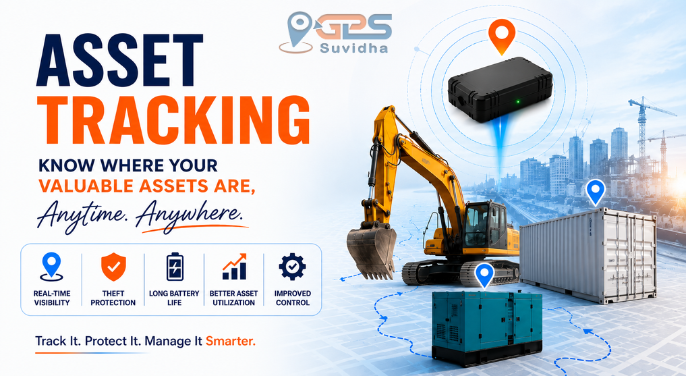
Most businesses can answer, instantly, where every one of their vehicles is right now. Ask where the spare generator, the third trailer, or last month’s rented compressor is sitting, and the confidence disappears. That single blind spot is where equipment quietly walks off, sits idle for weeks, or gets “misplaced” between sites – and it’s costing businesses far more than they realize.
Asset tracking fixes exactly this. A GPS asset tracking system brings the same real-time visibility to equipment your fleet-tracking software was never built to watch – machinery, containers, tools, and inventory that don’t have an engine, a driver, or a fixed route, yet carry real cost when they go missing.
Here’s what this guide covers: what asset tracking is and how it differs from vehicle tracking, how the technology actually works, the business benefits worth paying attention to, which assets are worth tracking, and how to pick a provider that gets it right. If a missing trailer or an unaccounted-for generator sounds familiar, keep reading.
What Is Asset Tracking, Really?
Asset tracking is the use of GPS asset trackers – compact, battery-powered devices – to monitor the location, movement, and status of non-vehicular business assets – think construction equipment, shipping containers, trailers, generators, pallets, tools, and even high-value inventory.
Unlike vehicle trackers, which typically draw power from the vehicle’s own battery, asset tracking devices run on their own internal battery. This is the fundamental difference, and it’s what makes GPS asset tracking possible for equipment that has no engine, no ignition, and no power source of its own. A generator parked in a yard, a trailer detached from its truck, or a container sitting at a port can all be located in real time, because the tracker carries its own power.
Once installed, the device reports location at set intervals (or continuously, depending on the plan), giving you a live map view of where every tagged asset is -whether it’s on your premises, in transit, or has been moved somewhere it shouldn’t be.
How Asset Tracking Differs From Vehicle Tracking
Vehicle tracking answers “where is my truck right now, and what route is it taking?” Asset tracking answers a different, often more urgent question: “is this piece of equipment where I left it?” Vehicles move constantly and predictably along routes. Assets often sit still for long stretches – until they don’t. That stillness is exactly why theft and misplacement of assets go unnoticed for days, sometimes weeks, while a missing vehicle would be flagged within hours.
If you’re already using GPS Suvidha’s fleet management solution for your vehicles, asset tracking is the natural next layer – same login, same visibility principle, extended to everything your fleet carries or works alongside.
Benefits of Asset Tracking for Modern Businesses
1. Theft Prevention and Recovery
Construction sites, warehouses, and logistics yards are prime targets for equipment theft, precisely because high-value assets often sit unattended overnight or over weekends. A tracked asset dramatically reduces the appeal of stealing it in the first place, and if it is taken, real-time location data gives you and law enforcement a genuine shot at recovery – often within hours rather than never.
2. Fewer “Where Did It Go?” Moments
Every operations manager has lived this: a piece of equipment is needed on-site, and nobody can say where it currently is. It might be at another site, in a supplier’s yard, or simply misplaced. Asset tracking removes the guesswork. One dashboard, one search, and you know exactly where that generator, trailer, or tool crate is sitting right now – even in remote or hard-to-reach locations.
3. Smarter Utilization of Costly Equipment
Idle assets are money sitting still. When you can see utilization patterns across your fleet of equipment, it becomes obvious which machines are overworked, which are gathering dust, and where you’re overspending on rentals when owned equipment nearby is sitting idle. That visibility alone often pays for the tracking system within months.
4. Accurate Routing and Dispatch
For assets that do move – trailers, containers, mobile equipment – accurate route data means better planning. You can direct assets to the correct location the first time, avoid unnecessary detours, and coordinate handoffs between sites without a dozen phone calls to confirm where something currently is.
5. Insurance and Compliance Advantages
Insurers increasingly favor businesses that can demonstrate active asset monitoring, since it reduces claim risk. In the event of a loss, GPS location history and time-stamped movement records also give you documented proof to support a claim, rather than relying on someone’s memory of when an asset was last seen.
Which Assets Should You Track With GPS?
Asset tracking isn’t limited to any one industry. If it’s valuable, portable, and not a vehicle, it’s a candidate for a GPS asset tracking device:
- Construction & heavy equipment – excavators, generators, compressors, cement mixers
- Logistics & transport – trailers, shipping containers, cargo crates, pallets
- Rental businesses – any equipment leased out to customers, where location visibility protects against non-return
- Warehousing – forklifts, movable racking, high-value inventory batches
- Field services – tool kits, mobile power units, portable diagnostic equipment
The common thread: these are assets that leave your direct line of sight regularly, and whose absence isn’t discovered until someone actively goes looking for them.
How Does a GPS Asset Tracking System Work?
Understanding the mechanics helps you evaluate whether a provider’s asset tracking software is actually built for the job:
Device installation – A compact, battery-powered GPS tracker is fitted onto or inside the asset. Because it isn’t wired to an external power source, installation is quick and doesn’t require any modification to the equipment itself.
Location transmission -The device communicates its position via cellular or satellite networks at configured intervals, balancing battery life against how frequently you need updates.
Dashboard visibility – Location data feeds into a central platform where you can view every tracked asset on a map, check movement history, and see current status at a glance.
Alerts and geofencing-Most systems let you draw virtual boundaries (geofences) around a site. If a tracked asset crosses that boundary – say, a container leaves the port yard outside of scheduled hours – you get an immediate alert.
Battery management – Because these devices run on internal batteries, good systems monitor battery health and notify you before a tracker goes dark, so you’re never caught with a “silent” asset at the worst possible moment.
Choosing the Right Asset Tracking Provider
Not all tracking providers are built the same, and the difference shows up exactly when you need the system most. When evaluating a provider, look for:
Battery life that matches your use case. An asset that sits idle for weeks needs a tracker with long standby life, not one built for daily vehicle use.
Reliable coverage in remote or low-signal areas. Construction sites, ports, and rural yards often have patchy connectivity. Your provider needs a track record of solid coverage, not just urban performance.
Simple, actionable dashboards. A tracking system is only useful if your team can actually read it without training. Clear maps, clear alerts, no clutter.
Geofencing and instant alerts. Passive tracking is good; active alerting is better. You want to know the moment something leaves where it should be, not discover it during a routine check.
Support that understands your industry. Whether it’s construction, logistics, or rental equipment, a provider familiar with your specific asset challenges will configure the system more usefully than a generic setup.
GPS Suvidha’s asset tracking solution is built around exactly these priorities – helping businesses locate assets in remote locations, cut theft risk, and recover stolen equipment faster, using trackers designed to run independently of any vehicle power source.
Meta description (152 characters): GPS asset tracking gives you real-time visibility over equipment, trailers & tools – not just vehicles. Cut theft risk. Locate assets instantly.
Frequently Asked Questions
Asset tracking uses battery-powered GPS devices attached to non-vehicular equipment – like generators, trailers, containers, or tools – to monitor their real-time location and movement, independent of any vehicle’s power supply
Vehicle trackers draw power from the vehicle itself and are built for continuous movement monitoring. Asset trackers run on internal batteries, which lets them be fitted to equipment that has no engine or power source of its own, including items that sit stationary for long periods.
Yes. Real-time location data significantly increases the chances of recovering stolen assets, since you and law enforcement can act on the equipment’s current location rather than searching blind.
Construction companies, logistics and transport operators, equipment rental businesses, warehouses, and field service companies all benefit – essentially any business with valuable, portable equipment that isn’t a vehicle.
Battery life varies by device and reporting frequency, but trackers designed for asset use are built for extended standby, often lasting weeks to months between charges, since assets may sit idle for long stretches between movements.
Yes, quality asset tracking solutions are specifically designed to maintain visibility even when assets are staged away from your facility or in remote areas, using cellular or satellite connectivity.
Costs vary by scale and device count, but most businesses find the investment pays for itself quickly through reduced theft losses, better equipment utilization, and fewer hours spent searching for misplaced items
Conclusion
Vehicle tracking has become standard practice for most businesses – but the assets sitting in your yard, on your job sites, or moving between locations without an engine of their own are just as valuable, and often far less protected. Asset tracking closes that blind spot, giving you real-time visibility, faster theft recovery, and the kind of operational control that turns “we think it’s somewhere near site B” into “it’s right there, on the map.” If your vehicles are covered but your equipment isn’t, it’s worth asking why. Explore GPS Suvidha’s Asset Tracking solution and start tracking what matters beyond your fleet.