
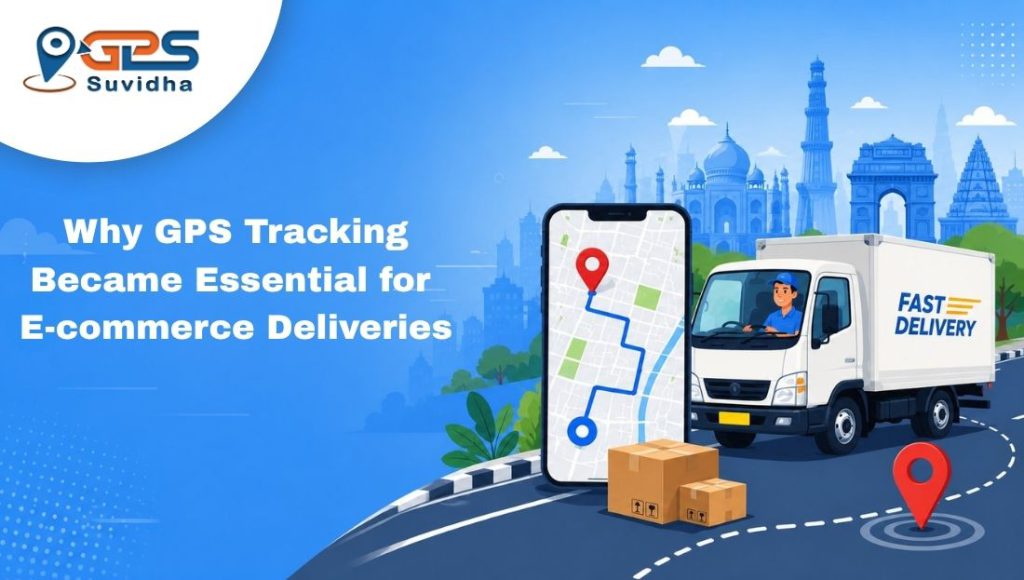
The e-commerce industry has grown rapidly over the past few years. Today, customers expect faster deliveries, real-time updates, and better order tracking. Because of these expectations, delivery management has become more challenging for e-commerce companies. Before GPS Tracking systems became common, managing deliveries was much more difficult. Businesses often depended on phone calls, manual coordination, and estimated delivery times.
However, GPS Technology changed this completely by improving delivery visibility, route planning, and real-time tracking. Today, many e-commerce companies depend heavily on GPS Systems to manage deliveries efficiently and improve customer experience.
Delivery Challenges E-commerce Companies Faced Before GPS Tracking
Before GPS Tracking Systems, e-commerce businesses commonly faced problems such as:
- Delayed deliveries
- Poor route planning
- Lack of real-time delivery visibility
- Communication gaps with delivery drivers
- Difficulty handling high delivery volumes
- Customer complaints about delivery updates
Without real-time monitoring, managing large-scale delivery operations was difficult and time-consuming.
Why E-commerce Deliveries Depend More on GPS Than Ever
First, customers now expect real-time delivery updates
Modern customers want to know exactly where their orders are and when they will arrive.
Without Real-Time GPS Tracking, businesses struggle to provide accurate delivery updates.
GPS systems help e-commerce companies:
- Track delivery vehicles live
- Share estimated arrival times
- Improve customer communication
This improves transparency and customer satisfaction.
Industry logistics studies show that real-time visibility has become an important part of delivery operations.
Faster deliveries became possible with route optimization
Delivery speed is one of the biggest competitive factors in e-commerce.
Before GPS Technology, drivers often selected routes manually, which sometimes caused delays and inefficient travel.
GPS Vehicle Tracking systems introduced route optimization and live navigation support.
This helps drivers:
- Avoid traffic congestion
- Select shorter routes
- Reduce delivery delays
As a result, e-commerce companies can improve delivery performance and operational efficiency.
Managing high delivery volumes became easier
As online shopping increased, delivery volumes also grew rapidly.
Managing hundreds or thousands of deliveries manually became extremely difficult.
GPS systems simplified delivery management by providing:
- Real-time fleet visibility
- Automated route tracking
- Better operational coordination
This helped businesses manage large delivery networks more efficiently.
Better communication improved delivery operations
Earlier, delivery coordination depended heavily on phone calls between managers and drivers.
This often caused:
- Delayed updates
- Miscommunication
- Incomplete delivery information
With GPS Tracking, businesses now receive automatic real-time updates about vehicle movement and delivery status.
This improves coordination and reduces operational confusion.
Fuel and operational costs became easier to control
Fuel costs are a major expense for delivery businesses.
Without route optimization and tracking, companies often faced:
- Extra travel distance
- Traffic delays
- Unnecessary fuel usage
Fleet management research shows that optimized routes and reduced idle time help lower fuel consumption significantly.
Because of this, many e-commerce companies now rely on GPS Systems to improve cost efficiency.
Delivery security and monitoring improved
E-commerce companies also need to protect delivery vehicles and shipments.
GPS Tracking Systems help businesses:
- Monitor delivery vehicle movement
- Track route history
- Improve theft monitoring and response
This increases delivery security and operational control.
Data-driven delivery management became possible
Another major advantage of GPS Technology is access to operational data.
Businesses can analyze:
- Delivery performance
- Route efficiency
- Driver activity
- Travel time patterns
This helps companies improve long-term delivery planning and operational efficiency.
Read More :- How Logistics Companies Improved Operations Using GPS Systems
Why GPS Tracking is Becoming More Important in India
In India, e-commerce deliveries face additional challenges, such as:
- Heavy city traffic
- High order volumes
- Long-distance deliveries
- Rising customer expectations
Without proper tracking systems, managing these challenges becomes difficult.
Because of this, many Indian e-commerce and logistics companies are increasingly adopting GPS Tracking to improve delivery management and customer service.
Today, GPS technology plays an important role in modern Indian e-commerce operations.
How GPS Suvidha Helps E-commerce Delivery Operations
Modern solutions like GPS Suvidha help businesses manage delivery operations more efficiently.
With GPS Suvidha, companies can:
- Track delivery vehicles in real time
- Monitor routes and delivery movement
- Improve fleet visibility and coordination
- Access reports and operational insights
This helps businesses improve delivery efficiency and customer communication.
Instead of depending on assumptions, companies get accurate, real-time information that supports smarter operational decisions.
Looking for Better Control Over Delivery Operations?
If you want better delivery visibility, improved route management, and smoother operational control, GPS technology can be a practical solution.
With solutions like GPS Suvidha, e-commerce businesses get real-time tracking, route optimization support, and easy-to-use tools that help simplify delivery management.
Instead of relying on manual updates, businesses can manage deliveries using accurate real-time data.
Frequently Asked Questions
E-commerce companies use GPS tracking to monitor deliveries, improve route planning, and provide real-time delivery updates.
GPS improves delivery efficiency through route optimization, live tracking, and better fleet coordination.
Yes. Better route planning and reduced idle time help lower fuel and operational costs.
Yes. Businesses of all sizes can use GPS systems to improve delivery management and operational visibility.