
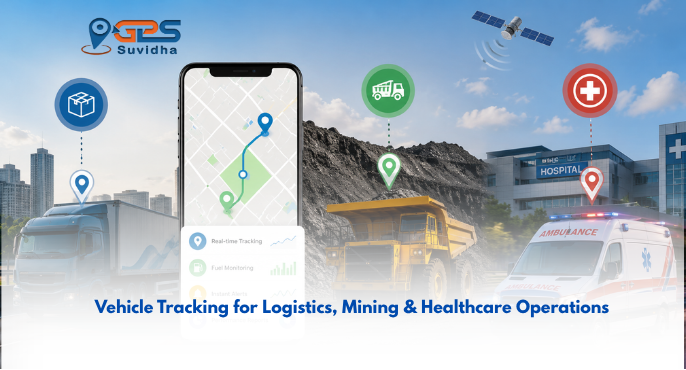
A vehicle tracking solution is a GPS system that tells a business exactly where its vehicles are and what they’re doing. In logistics, it stops late deliveries and fuel waste. In mining, it catches missing trips. In healthcare, it gets ambulances to people faster.
Any business that runs vehicles deals with the same problem: someone always needs to know where a vehicle is, right now. For years, the only answer was calling the driver. That doesn’t work once you have more than a few vehicles to manage.
This is why GPS tracking has become so common. Let’s look at three industries where this matters the most, logistics, mining, and healthcare, and see exactly what problems it solves in each one.
Why These Three Industries Need It Most
Logistics, mining, and healthcare look nothing like each other. But they all break in the same way when something goes wrong with a vehicle. A late delivery upsets a customer. A missing mining trip quietly costs money. A late ambulance can cost a life.
That’s why these three industries were among the first to start using GPS tracking seriously. It’s not about being modern, it’s about the cost of not knowing being too high.
Logistics
The problem
A transport company might have dozens of vehicles on the road at once. Without tracking, the only way to know what’s happening is to call the driver. That leads to a few common issues:
- Nobody can say for sure when a delivery will arrive
- Drivers sometimes take detours for personal work
- Fuel gets used but nobody knows exactly where it went
- When a customer asks why is it late, there’s no real answer
None of these feel huge on their own. But add them up across 50 or 100 vehicles, and it becomes real money lost every month.
How tracking fixes it
You can see every vehicle on one map. No more calling drivers to ask where they are.
You get an alert if a driver goes off the planned route. This catches unapproved stops early, before it becomes a habit.
You know delays before the customer complains. Instead of guessing, you can just tell them, your delivery is 20 minutes away.
You can spot vehicles wasting fuel. Reports show which vehicles are idling or burning fuel without actually moving.
You get data on driving habits. Harsh braking, speeding, sudden stops all show up, helping improve safety and cut down on accidents over time.
Basically, it turns fleet management from constant firefighting into something you can actually plan around.
Mining
The problem
Mining vehicles do the same trip over and over, loading point to unloading point, sometimes hundreds of times a day. That repetition creates its own problems:
- Some vehicles skip the weighing station on purpose
- The number of trips logged doesn’t match reality
- Loads sometimes never make it to the unloading point
- A few vehicles do all the work while others sit unused
Because mining sites are large and spread out, it’s almost impossible to catch this just by watching. It usually shows up much later, when the numbers don’t add up.
How tracking fixes it
Every entry and exit gets logged automatically. No more relying on someone remembering how many trips a vehicle made.
You get flagged when a vehicle skips the weighing point. This closes one of the easiest ways money quietly disappears.
You see exact trip counts, live. No guessing, no manual logbooks.
You see which vehicles are actually working. This helps you use your fleet better instead of just buying more vehicles.
You track engine hours, not just distance. For equipment like excavators, hours running matter more than kilometers travelled.
Instead of finding out about a problem weeks later, you catch it the same day.
Healthcare
The problem
Nothing here matters more than ambulance response time. The common issues are:
- Dispatchers guessing which ambulance is actually closest
- Ambulances used for personal or non-emergency trips
- No idea what the traffic looks like before choosing a route
- No data showing where the delays actually come from
Since response time can decide a patient’s outcome, these aren’t just small process problems, they affect real people.
How tracking fixes it
You instantly know which ambulance is closest. No more calling around to check.
Drivers get routed around traffic. This saves minutes that genuinely matter.
You get alerted if an ambulance is used outside approved hours. This stops misuse before it becomes routine.
You get real delay data. Which route is slow, which time of day, which vehicle, you can actually see it.
You can plan ahead using past data. For example, knowing which part of a city needs an ambulance stationed closer.
This isn’t about efficiency in the usual business sense. It’s about help reaching someone faster.
What They All Have in Common
| Industry | The problem | What tracking fixes |
|---|---|---|
| Logistics | No idea about delays, detours, fuel waste | Live location, route alerts, fuel reports |
| Mining | Skipped weighing, missing trips, uneven work | Auto logging, trip counts, engine hour data |
| Healthcare | Slow response, misuse | Nearest vehicle info, usage alerts, delay data |
The pattern is always the same. Without visibility, you’re guessing. And guessing costs money, time, or worse. A vehicle tracking solution simply replaces the guess with an answer.
How to Pick the Right One
Not every GPS tracker is built the same way. Before choosing one, check for:
- Reports built for your industry. Mining needs engine hour data, healthcare needs nearest vehicle info, logistics needs fuel and route data.
- Real time alerts, not just a summary at the end of the day.
- Geofencing for key spots like loading points, hospitals, or delivery hubs.
- Room to grow as your fleet gets bigger.
- Support you can actually reach, since fleets run all day, every day.
FAQs
It’s a GPS system that shows a business exactly where its vehicles are and how they’re being used, in real time.
It catches vehicles skipping the weighing station, tracks trip counts accurately, and logs engine hours instead of just distance.
Yes. Knowing which ambulance is closest, plus traffic aware routes, saves minutes that matter in an emergency.
Yes. Even a few vehicles benefit from route and fuel tracking. It works for fleets of any size.
Most businesses notice a difference in fuel costs, delivery times, or overall control within one to three months.
Final Thoughts
A truck stuck for no clear reason. A mining vehicle skipping the weighbridge. An ambulance that could have arrived two minutes sooner. Different industries, same root problem, nobody had the full picture at the moment it mattered.
A vehicle tracking solution closes that gap. And once businesses start using one, they usually wonder how they managed without it.
GPS Suvidha builds tracking solutions for transport, mining, healthcare, and more, built around what each industry actually needs.
Want to see it for your fleet? Explore our vehicle tracking solution, check out our Fleet Management service, or get in touch with our team for a free demo.