
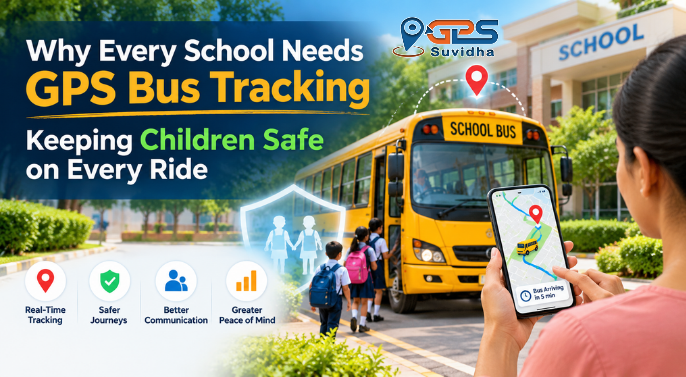
Every parent wants their child to reach school safely and return home on time. For schools, managing daily transportation means ensuring that buses follow their routes, drivers follow safety procedures, and parents receive timely updates.
However, traffic jams, unexpected delays, route changes, and communication gaps can make school transport management challenging.
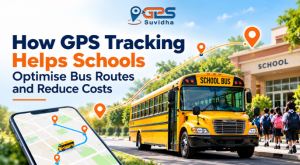
GPS bus tracking for schools helps school authorities monitor bus locations, review routes, share transport updates, and manage daily journeys more efficiently. With features such as real-time tracking, geofencing, route deviation alerts, and parent notifications, schools can improve transport visibility and keep families better informed.
In this guide, we will explore why school bus GPS tracking is important, its key benefits, the features schools should look for, and how to choose the right tracking solution.
What Is GPS Bus Tracking for Schools?
GPS bus tracking is a technology that uses the Global Positioning System (GPS) to determine a vehicle’s location and display it on a digital map.
A typical school bus GPS tracking system includes a GPS device installed in the bus, a tracking dashboard for school administrators, and an app or web portal for authorised parents.
Depending on the system, schools can:
- Track bus locations on a live map.
- Monitor planned routes and actual vehicle movement.
- Receive alerts about route deviations and delays.
- Review trip history and driving-related reports.
- Send transport notifications to parents.
- Monitor pickup and drop-off events when supported by the system.
Some solutions also offer student boarding and drop-off verification through compatible technologies.
It is important to understand that basic GPS tracking identifies the vehicle’s location. Confirming whether a particular child has boarded or exited requires a separate student-level verification feature.
Why Is GPS Bus Tracking Important for Schools?
School transportation involves several responsibilities. Schools must coordinate drivers, buses, pickup points, routes, and parent communication every day.
Without reliable tracking information, transport staff may need to make repeated calls to drivers to check locations and arrival times. Parents may also have to wait without knowing whether the bus is delayed.
A school bus tracking system provides better visibility into vehicle movement. This helps school administrators respond to transport issues and share more informed updates with parents.
In Uttar Pradesh, the Government’s Integrated School Vehicle Monitoring Portal supports school vehicle registration and real-time location monitoring, alongside inspection and compliance information. Schools should check the applicable state and local requirements for their vehicles.
GPS tracking is not a replacement for vehicle inspections, driver training, or adult supervision. It is an additional tool that supports a more organised school transportation process.
7 Benefits of GPS Bus Tracking for Schools
1. Real-Time School Bus Location Tracking
Real-time tracking helps school administrators check where their buses are during a journey.
Instead of relying only on phone calls, transport coordinators can use the tracking dashboard to review the reported location of each vehicle.
For example, if a bus is delayed because of heavy traffic, the school can check its location and provide parents with a more accurate update.
This is particularly useful for schools managing multiple buses across different routes.
Key benefit: Better visibility into daily bus movement and fewer location-related enquiries.
2. Better Communication with Parents
Parents often want to know when the school bus will arrive at their pickup point or reach the school.
A school bus tracking app can help answer these questions by providing location updates and configured notifications.
For example, an alert that a bus is approaching a pickup point can help parents prepare in advance. If the bus is delayed, the school may be able to share an update rather than leaving families uncertain.
Better communication can also reduce routine calls to the school transport office.
Key benefit: Parents receive more timely information about their child’s school transport.
3. Route Deviation and Speed Monitoring
Following approved routes and driving responsibly are essential parts of school transportation.
Depending on the tracking system, administrators can configure alerts for route deviations and speed-related events.
If a bus moves away from its planned route, the transport team can review the information and contact the driver to understand the reason.
Similarly, speed reports can help identify driving patterns that require further review.
These alerts should be investigated in context. A route deviation may result from road closures, traffic diversions, or other legitimate circumstances.
Key benefit: Better transport oversight and more informed follow-up on unusual driving events.
4. Improved Response During Emergencies
Unexpected situations, such as vehicle breakdowns, road closures, or medical emergencies, can occur during a school bus journey.
Knowing the bus’s reported location can help school staff coordinate assistance and communicate with the driver.
For example, if a bus breaks down during the morning route, the transport coordinator can use the tracking dashboard to identify its location and arrange the next steps.
GPS tracking alone cannot provide emergency assistance or guarantee a quick response. Schools still need emergency contacts, trained staff, and clear procedures for informing parents and arranging support.
Key benefit: Useful location information when staff need to coordinate a response.
5. Improved Driver Accountability
School bus drivers must follow approved routes, observe traffic rules, and report unexpected issues.
A GPS tracking system can provide trip history, stop records, and available driving-related reports. School administrators can use this information to review recurring delays, unexplained stops, and route changes.
These records can also help clarify situations in which a driver is questioned about a delay.
For example, tracking history may show that a bus encountered a diversion rather than departing from its route without a reason.
Monitoring should be transparent and consistent with applicable workplace and privacy requirements.
Key benefit: Clearer trip records and more informed transport management.
6. Better Route Planning and Time Management
Managing school transport involves balancing travel time, pickup points, school timings, traffic, and student needs.
GPS tracking data can help schools identify routes that regularly experience delays or stops that take longer than expected.
Transport managers can review historical journey information to identify opportunities to improve schedules and route planning.
For example, if a bus repeatedly arrives late at a particular stop, the school can investigate whether traffic, stop sequencing, or the planned schedule needs adjustment.
Any route changes should continue to prioritise safe pickup and drop-off locations.
Key benefit: Better-informed route planning and more efficient use of transport resources.
7. Greater Trust Between Schools and Parents
Parents trust schools to manage their children’s daily commute responsibly.
Clear communication and transparent transport procedures help build that trust. GPS bus tracking supports this process by making vehicle movement easier to monitor and providing parents with relevant updates.
Schools can also explain how tracking works, what parents can access, and whom they should contact if a bus is delayed.
Tracking does not eliminate every transport risk, but it can make communication more consistent and help schools demonstrate a structured approach to transport management.
Key benefit: Greater transparency between school authorities and families.
Essential Features to Look for in a School Bus GPS Tracking System
Not all GPS tracking solutions offer the same capabilities. Schools should compare available features and choose a system that matches their transport requirements.
| Feature | Benefit for schools |
| Real-time GPS tracking | Shows the bus’s reported location on a map. |
| Route history | Helps review completed journeys and delays. |
| Geofencing | Generates alerts when a bus enters or leaves a defined area. |
| Route deviation alerts | Flags movement away from a planned route. |
| Speed monitoring | Supports review of configured speed-related events. |
| Parent app or portal | Gives authorised parents access to tracking information. |
| Pickup and drop-off alerts | Helps communicate bus arrival events. |
| Student verification | Confirms boarding or drop-off when compatible technology is installed. |
| Transport reports | Supports fleet oversight and route planning. |
| Access controls | Helps protect location and student-related information. |
Before selecting a provider, ask about location-update frequency, network coverage, data security, technical support, offline data handling, installation costs, and recurring charges.
The right system should be reliable, easy to use, and suitable for the school’s fleet size.
How Can Schools Implement GPS Bus Tracking?
Schools can introduce GPS tracking through a planned implementation process.
Step 1: Identify transport challenges. Review recurring delays, parent enquiries, route monitoring gaps, and fleet management needs.
Step 2: Assess the fleet. List the buses and vans that require tracking, including vehicles managed by transport contractors.
Step 3: Compare service providers. Evaluate device quality, tracking features, parent access, reporting, support, and pricing.
Step 4: Configure routes and alerts. Set up approved routes, geofences, notifications, and authorised user accounts.
Step 5: Train drivers and transport staff. Explain monitoring procedures, alert handling, and how to report route changes or emergencies.
Step 6: Inform parents. Provide access instructions and explain how to receive bus location updates and report concerns.
Step 7: Review performance. Check device availability, recurring delays, route history, and parent communication to identify areas for improvement.
Schools can begin with a small group of buses before expanding the system across the fleet.
Is GPS Tracking Enough to Ensure School Bus Safety?
No. GPS tracking is a useful safety-support tool, but it cannot guarantee that every journey will be risk-free.
A comprehensive school transportation safety programme should also include:
- Regular vehicle inspections and maintenance.
- Verification of required vehicle documents.
- Driver authorisation and appropriate training.
- Safe pickup and drop-off procedures.
- Suitable supervision and student handover procedures.
- Clear emergency communication arrangements.
- Appropriate protection of student and location data.
Schools should follow the applicable transport department rules and school-board guidance.
GPS tracking complements these measures by helping authorised staff understand vehicle movement and respond to transport issues with better information.
Why Choose GPS Suvidha for School Bus Tracking?
GPS Suvidha provides a school bus tracking solution with a Pick and Drop mobile application designed to support school transport management.
Its published school bus tracking service describes features such as real-time bus monitoring, pickup and drop-off reminders, route deviation alerts, and notifications from school administrators to parents.
These features can help schools improve transport visibility, keep families informed, and manage daily bus operations more effectively.
Before choosing a solution, schools should confirm the features, hardware requirements, parent access options, support arrangements, and pricing that apply to their specific requirements.
If your school is planning to improve its transport management process, explore the GPS Suvidha School Bus Tracking Solution to learn more.
Frequently Asked Questions About GPS Bus Tracking for Schools
1. Why do schools need GPS bus tracking?
GPS bus tracking helps schools monitor bus locations, review routes, communicate delays, and manage transport operations. It also allows authorised parents to access available vehicle location updates.
2. How does a school bus GPS tracking system work?
A GPS device installed in the bus determines its location and sends data through a communication network. A tracking platform displays that information on a map and may provide alerts, trip history, and reports.
3. Can parents track a school bus in real time?
Yes, when the school uses a tracking system that offers authorised parent access. Depending on the service, parents may see the bus location and receive notifications about approaching stops or delays.
4. Does GPS tracking make school buses safer?
GPS tracking supports transport oversight by making vehicle movement more visible and helping staff investigate unusual events. It should be combined with safe driving practices, inspections, supervision, and emergency procedures.
5. What is geofencing in school bus tracking?
Geofencing creates a virtual boundary around a location, such as a school or pickup point. A compatible tracking system can send an alert when the bus enters or leaves that area.
6. Can GPS tracking help reduce school transport costs?
GPS tracking data can help schools review route efficiency, recurring delays, and vehicle usage. Any cost savings depend on how the school uses the data and whether operational changes are appropriate.
7. Can GPS tracking confirm whether a child has boarded the bus?
Basic GPS tracking identifies the vehicle, not the individual child. Student boarding and drop-off confirmation requires an additional verification feature, such as a compatible RFID system or another configured identification process.
8. What should schools check before buying a GPS bus tracking system?
Schools should compare location-update frequency, tracking accuracy, parent access, alerts, reporting, privacy controls, network coverage, technical support, installation costs, and ongoing fees.
9. What happens if a school bus loses network connectivity?
Live tracking updates may be interrupted until the device can transmit data again. Depending on the device, historical location records may be stored and synchronised later. Schools should confirm offline-data handling with the provider.
10. Is GPS bus tracking mandatory for schools in India?
Requirements depend on applicable central and state rules, vehicle categories, and local implementation. Schools should confirm the current requirements with the relevant transport department and education authority.
Conclusion: Make School Transportation More Transparent with GPS Tracking
Keeping children safe during their daily commute requires reliable vehicles, responsible drivers, proper supervision, and clear communication.
GPS bus tracking for schools adds another layer of visibility by helping administrators monitor vehicle locations, review routes, and share timely updates with parents.
With the right system and clear transport procedures, schools can improve everyday coordination, strengthen accountability, and make school transportation easier to manage.
Looking for a school bus tracking solution? Explore GPS Suvidha School Bus Tracking to discover how GPS-based monitoring can support your school’s transport operations.
{ “@context”: “https://schema.org”, “@type”: “FAQPage”, “mainEntity”: [ { “@type”: “Question”, “name”: “Why do schools need GPS bus tracking?”, “acceptedAnswer”: { “@type”: “Answer”, “text”: “GPS bus tracking helps schools monitor bus locations, review routes, communicate delays, and manage transport operations. It also allows authorised parents to access available vehicle location updates.” } }, { “@type”: “Question”, “name”: “How does a school bus GPS tracking system work?”, “acceptedAnswer”: { “@type”: “Answer”, “text”: “A GPS device installed in the bus determines its location and sends data through a communication network. A tracking platform displays that information on a map and may provide alerts, trip history, and reports.” } }, { “@type”: “Question”, “name”: “Can parents track a school bus in real time?”, “acceptedAnswer”: { “@type”: “Answer”, “text”: “Yes, when the school uses a tracking system that offers authorised parent access. Depending on the service, parents may see the bus location and receive notifications about approaching stops or delays.” } }, { “@type”: “Question”, “name”: “Does GPS tracking make school buses safer?”, “acceptedAnswer”: { “@type”: “Answer”, “text”: “GPS tracking supports transport oversight by making vehicle movement more visible and helping staff investigate unusual events. It should be combined with safe driving practices, inspections, supervision, and emergency procedures.” } }, { “@type”: “Question”, “name”: “What is geofencing in school bus tracking?”, “acceptedAnswer”: { “@type”: “Answer”, “text”: “Geofencing creates a virtual boundary around a location, such as a school or pickup point. A compatible tracking system can send an alert when the bus enters or leaves that area.” } }, { “@type”: “Question”, “name”: “Can GPS tracking help reduce school transport costs?”, “acceptedAnswer”: { “@type”: “Answer”, “text”: “GPS tracking data can help schools review route efficiency, recurring delays, and vehicle usage. Any cost savings depend on how the school uses the data and whether operational changes are appropriate.” } }, { “@type”: “Question”, “name”: “Can GPS tracking confirm whether a child has boarded the bus?”, “acceptedAnswer”: { “@type”: “Answer”, “text”: “Basic GPS tracking identifies the vehicle, not the individual child. Student boarding and drop-off confirmation requires an additional verification feature, such as a compatible RFID system or another configured identification process.” } }, { “@type”: “Question”, “name”: “What should schools check before buying a GPS bus tracking system?”, “acceptedAnswer”: { “@type”: “Answer”, “text”: “Schools should compare location-update frequency, tracking accuracy, parent access, alerts, reporting, privacy controls, network coverage, technical support, installation costs, and ongoing fees.” } }, { “@type”: “Question”, “name”: “What happens if a school bus loses network connectivity?”, “acceptedAnswer”: { “@type”: “Answer”, “text”: “Live tracking updates may be interrupted until the device can transmit data again. Depending on the device, historical location records may be stored and synchronised later. Schools should confirm offline-data handling with the provider.” } }, { “@type”: “Question”, “name”: “Is GPS bus tracking mandatory for schools in India?”, “acceptedAnswer”: { “@type”: “Answer”, “text”: “Requirements depend on applicable central and state rules, vehicle categories, and local implementation. Schools should confirm the current requirements with the relevant transport department and education authority.” } } ] }