
Running a transportation business involves more than arranging trucks and delivering goods. Transporters must manage drivers, monitor vehicle movement, coordinate deliveries, control operating expenses and ensure that every vehicle is being used efficiently.
For businesses operating multiple trucks across different routes, these responsibilities can become difficult to manage. A transporter may have vehicles travelling from Delhi to Mumbai, Chandigarh to Jaipur or Haryana to Uttar Pradesh at the same time. Without proper tracking, the operations team may have to depend on repeated driver calls to understand vehicle locations and journey progress.
This creates communication gaps, delays in decision-making and limited visibility into daily fleet operations.
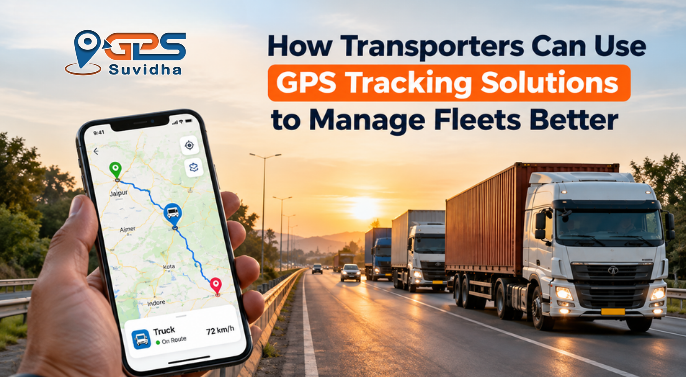
GPS Tracking Solutions provide transporters with a centralised way to monitor vehicle locations, review routes, receive alerts and analyse vehicle activity. By combining GPS hardware, digital maps and tracking software, businesses can access useful information about their fleet and manage transportation operations more effectively.
Whether you operate a small truck fleet or manage multiple commercial vehicles, the right GPS tracking system can make daily fleet monitoring more organised.
What Are GPS Tracking Solutions?
GPS Tracking Solutions are technology-based systems that help businesses monitor the location and movement of vehicles through GPS-enabled devices and tracking software.
A tracking device installed in a vehicle receives positioning signals from GPS satellites. It then transmits location information through a communication network to a tracking platform. Authorised users can access this information through a computer or compatible mobile device.
For transporters, this means they can monitor vehicle activity without depending entirely on manual driver updates.
A GPS tracking system can help businesses:
- View reported vehicle locations on digital maps.
- Monitor vehicle movement across different routes.
- Review historical trip information.
- Check speed-related information.
- Identify vehicle stoppages and idle periods.
- Receive configured alerts and notifications.
- Access vehicle activity reports.
- Monitor multiple vehicles through a centralised platform.
It is important to understand that GPS hardware and GPS tracking software perform different functions.
The hardware collects positioning information from the vehicle, while the software displays and organises that information so fleet owners can understand vehicle movement.
Together, they provide a practical foundation for modern fleet management.
Why Do Transporters Need GPS Tracking Solutions?
For transport businesses, vehicle visibility directly affects daily coordination. When trucks travel across different cities and highways, knowing their movement becomes important for managing deliveries and responding to operational issues.
Here are some common challenges that GPS tracking can help address.
1. Difficulty Monitoring Multiple Trucks
Imagine managing 20 trucks travelling to different destinations. Calling every driver individually to ask about their location can consume valuable time.
A centralised vehicle tracking platform allows fleet managers to check available vehicle locations from one dashboard.
This makes monitoring multiple vehicles more convenient and reduces dependence on repeated phone calls.
2. Unexpected Route Deviations
Sometimes drivers may take different routes because of traffic, road diversions, loading requirements or other circumstances.
Without proper route visibility, identifying these changes can be difficult.
GPS tracking software with route history and deviation alerts helps managers review vehicle movement and investigate unexpected route changes.
3. Delivery Delays
Late deliveries can affect warehouse schedules, customer commitments and transportation planning.
When a vehicle is delayed, the logistics team needs useful information to coordinate with the receiving location.
Access to vehicle movement and trip information helps businesses provide more informed updates and prepare for incoming deliveries.
4. Unnecessary Vehicle Stoppages
Long or unexpected stoppages can affect vehicle utilisation and trip schedules.
GPS tracking reports and configured idle-time alerts help transporters identify vehicles that remain stationary for longer than expected.
Managers can investigate the reason and take appropriate action.
5. Lack of Historical Vehicle Records
Manual tracking often makes it difficult to maintain complete records of vehicle movement.
A GPS tracking platform can provide historical trip information, helping fleet managers review routes, stoppages and vehicle activity.
These records can support better operational reviews and planning.
How Do GPS Tracking Solutions Work?
A GPS tracking system combines positioning technology, tracking hardware, communication networks and software.
The process generally involves four stages.
Step 1: GPS Device Determines Vehicle Location
A GPS tracking device installed in the truck receives signals from GPS satellites and calculates its geographical position.
Step 2: Location Information Is Transmitted
The device communicates the collected information through a supported mobile network or communication connection.
Step 3: Tracking Software Displays Vehicle Information
The tracking platform receives the information and displays the vehicle’s position on a digital map.
Step 4: Fleet Managers Monitor Vehicle Activity
Authorised users can access the platform to check vehicle locations, review routes, monitor available alerts and analyse trip reports.
Example:
Consider a transporter managing trucks between Delhi, Jaipur, Lucknow and Chandigarh.
Without GPS tracking, the operations team may need to call drivers several times to understand their journey progress.
With a centralised tracking platform, managers can check reported vehicle locations, review trip information and investigate unexpected stoppages from one place.
This creates a more organised approach to fleet monitoring.
Essential Features to Look for in GPS Tracking Software
Choosing GPS tracking software should involve more than checking whether it displays vehicle locations.
Transporters should look for features that solve practical fleet management problems.
1. Real-Time Vehicle Location Tracking
Real-time vehicle tracking helps fleet owners view the latest reported locations of their vehicles on digital maps.
This is particularly useful for businesses managing trucks across different cities and transportation routes.
For example, a fleet manager can check the reported location of a truck travelling from Delhi to Jaipur without repeatedly contacting its driver.
2. Route Monitoring and History
Route monitoring helps businesses review the paths followed by vehicles during their journeys.
Historical route information can help managers:
- Review previously travelled routes.
- Investigate unexpected diversions.
- Understand journey patterns.
- Check vehicle movement between locations.
3. Speed Monitoring
Overspeeding can create road safety risks and affect transportation operations.
GPS tracking systems with speed-monitoring capabilities help fleet managers review speed-related events and take appropriate action.
4. Smart Alerts and Notifications
Alerts help businesses identify situations that may require attention.
Depending on device compatibility and system configuration, these may include:
- Overspeeding notifications.
- Excessive idle-time alerts.
- Route deviation notifications.
- Geofence entry and exit alerts.
- Vehicle movement notifications.
5. Vehicle Stoppage Monitoring
Understanding when and where a vehicle stops can help transporters investigate unnecessary delays.
Stoppage reports provide useful information about vehicle activity and help managers review recurring operational issues.
6. Trip Reports and Activity Summaries
Historical reports help businesses understand how vehicles are being utilised.
Depending on the platform, these reports may include:
- Trip history.
- Vehicle movement.
- Arrival and departure information.
- Stoppage duration.
- Speed-related activity.
- Vehicle activity summaries.
7. GIS-Based Digital Maps
Geographic Information System (GIS) maps help users understand vehicle positions in their geographical context.
Detailed road mapping makes it easier for fleet managers to review vehicle locations across cities, highways and other areas.
8. Fuel and Engine Monitoring
Where supported by compatible hardware and integrations, GPS tracking solutions can provide fuel-related and engine-related information.
This can help businesses review fuel consumption patterns and vehicle operating activity.
Always confirm the availability of these features with the service provider before selecting a tracking package.
How GPS Tracking Solutions Help Improve Fleet Management
The value of GPS tracking goes beyond knowing where a truck is located. It provides information that can support several important transportation activities.
1. Better Fleet Visibility
Fleet visibility helps transporters understand vehicle movement across their operations.
Instead of depending entirely on individual driver updates, managers can use a centralised platform to check available vehicle information.
This is especially helpful when several trucks are travelling simultaneously.
2. Improved Delivery Coordination
Knowing the reported position of an incoming vehicle helps logistics teams coordinate unloading arrangements, warehouse schedules and delivery planning.
For example, if a truck is approaching a distribution centre, the operations team can prepare for its arrival using available tracking information.
3. Better Vehicle Utilisation
Vehicle stoppages, unnecessary movement and inefficient trip planning can affect fleet utilisation.
Tracking reports help managers identify operational patterns and investigate areas where improvements may be possible.
4. Improved Driver Accountability
Vehicle movement records, speed-related information and stoppage reports can help businesses review driving and operational patterns.
These records support more informed discussions with drivers and help establish clearer fleet monitoring practices.
5. More Informed Business Decisions
Historical tracking information can help transporters understand:
- Which vehicles regularly experience delays?
- Which routes involve longer stoppages?
- How frequently do vehicles deviate from planned routes?
- Which vehicles require operational attention?
- How efficiently are vehicles being utilised?
These insights can support better transportation planning and management decisions.
GPS Tracking Solutions for Different Transportation Businesses
Different industries have different tracking requirements. The right GPS tracking solution should match the type of vehicles, assets and operations being managed.
1. Transporters and Truck Owners
Truck owners can monitor vehicle locations, review routes, check trip history and identify unexpected stoppages.
This helps them maintain better visibility over their commercial vehicles.
2. Logistics and Supply Chain Companies
Logistics companies can use GPS tracking to monitor delivery vehicles, coordinate warehouse activities and review transportation delays.
It helps operations teams access vehicle movement information when planning deliveries.
3. Distribution Businesses
Distribution companies managing multiple delivery vehicles can review their movement between warehouses, retailers and customer locations.
This supports better delivery coordination and operational planning.
4. Passenger Bus Operators
Bus operators can use vehicle tracking to monitor assigned routes, review delays and identify route deviations.
GPS Suvidha also provides tracking solutions for passenger bus transportation.
GPS Suvidha
5. Construction and Heavy Machinery Businesses
Construction companies often manage valuable equipment such as JCBs, excavators and generators.
GPS-based monitoring can help locate equipment and review engine operating hours where supported.
Manual Vehicle Monitoring vs GPS Tracking Solutions
Many transport businesses still depend on phone calls, spreadsheets and manual driver updates.
These methods may work for a very small operation, but managing a larger fleet through manual communication can become difficult.
| Monitoring factor | Manual monitoring | GPS tracking |
| Vehicle location | Driver updates | Digital location information |
| Multiple vehicles | Repeated coordination | Centralised dashboard |
| Route history | Manual records | Historical tracking information |
| Speed monitoring | Difficult to verify | Available with supported devices |
| Vehicle stoppages | Manual confirmation | Stoppage information |
| Alerts | Manual communication | Configurable notifications |
| Trip reporting | Time-consuming | Digital activity reports |
| Fleet visibility | Limited | Improved visibility |
For transporters managing multiple commercial vehicles, GPS tracking offers a more structured way to access vehicle information and coordinate operations.
How to Choose the Right GPS Tracking Solution for Your Business
Every transportation business has different operational requirements. A transporter managing five trucks may need a different configuration from a logistics company operating hundreds of vehicles.
Before selecting a GPS tracking provider, consider these seven factors.
1. Understand Your Fleet Requirements
Identify how many vehicles you need to monitor and what type of vehicles you operate.
Consider whether you need tracking for trucks, buses, commercial cars, trailers or heavy machinery.
2. Check Location Update Frequency
Ask how frequently the device sends location information.
More frequent updates may be useful for operations that require closer monitoring. Actual update frequency depends on device capability, network availability and configuration.
3. Evaluate GPS Tracking Software
The tracking dashboard should be easy to understand and should display important vehicle information clearly.
Look for convenient access to maps, vehicle activity, reports and alerts.
4. Check Available Monitoring Features
Identify whether the solution supports the features your business requires, such as:
- Real-time vehicle monitoring.
- Route history.
- Speed monitoring.
- Stoppage alerts.
- Geofencing.
- Trip reports.
- Fuel monitoring, where supported.
5. Review Hardware and Installation
Check device compatibility, installation requirements, connectivity and maintenance support before making a decision.
6. Consider Business Growth
Choose a platform that can accommodate additional vehicles as your transportation business expands.
7. Check Technical Support
GPS tracking becomes part of daily fleet operations. Therefore, installation assistance, troubleshooting and customer support are important considerations.
A good service provider should understand your operational requirements and recommend a suitable tracking configuration.
Why Choose GPS Suvidha for GPS Tracking Solutions
For transporters and fleet owners looking to improve vehicle visibility, GPS Suvidha offers GPS-based vehicle tracking and fleet monitoring solutions.
The company combines GPS tracking hardware, GIS mapping technology and tracking software to help businesses monitor vehicle movement and review fleet activity.
Here are some of the capabilities highlighted on its official GPS Tracking Solutions service page.
Real-Time Vehicle Tracking
GPS Suvidha offers vehicle location monitoring with reported position updates at intervals of up to 10 seconds, as described on its service page.
This helps authorised users access frequent vehicle location information through the tracking platform.
Advanced GIS Mapping
Its GIS mapping system provides detailed geographical and road views across Indian locations, helping users understand vehicle positions and routes.
Customised Alerts and Notifications
GPS Suvidha highlights configurable alerts for events such as overspeeding, excessive idling, route deviations and vehicle entry or exit from defined geographical zones.
Vehicle Activity Reports
The platform provides vehicle activity reports, daily summaries and trip history to help businesses review vehicle movement and operational patterns.
Route Monitoring and Planning
Route monitoring tools help fleet managers review vehicle movement and identify unexpected route changes.
Tracking Hardware and User-Friendly Software
GPS Suvidha brings together tracking hardware and software with installation support and a platform designed for monitoring individual vehicles as well as larger fleets.
These features can help transporters and fleet owners access vehicle information in a more organised way.
gpssuvidha.com+1
Explore the service: GPS Tracking Solutions by GPS Suvidha.
Who Can Benefit from GPS Suvidha?
- Truck owners and transporters.
- Small and large fleet operators.
- Logistics and supply chain companies.
- Distribution businesses.
- Commercial vehicle operators.
- Businesses managing heavy machinery.
If your business needs better vehicle visibility, GPS Suvidha can help you explore a tracking solution according to your fleet requirements.
Frequently Asked Questions About GPS Tracking Solutions
1. What are GPS Tracking Solutions?
GPS Tracking Solutions use GPS-enabled devices, communication networks and tracking software to monitor vehicle locations and movement. They help transporters and fleet owners access vehicle information through a centralised platform.
2. How do GPS tracking solutions work?
A GPS tracking device receives positioning information from satellites and transmits relevant data through a communication network to tracking software. Authorised users can then view vehicle locations and available tracking reports.
3. Can I track multiple trucks using one platform?
Yes. GPS fleet monitoring platforms can display multiple vehicles through a centralised dashboard. This helps transporters monitor their fleet without checking every vehicle separately.
4. How does GPS tracking help transporters?
GPS tracking helps transporters monitor vehicle locations, review routes, identify stoppages, receive alerts and access trip reports. These features support better fleet visibility and transportation coordination.
5. Can GPS tracking monitor vehicle speed?
Yes. GPS tracking systems with speed-monitoring capabilities can record speed-related information and provide configured overspeeding notifications.
6. Can fleet owners check vehicle route history?
Yes. Tracking platforms with historical route reporting allow fleet owners to review previously travelled routes and vehicle movement during selected periods.
7. Is GPS tracking useful for small transport businesses?
Yes. Small transporters can use GPS tracking to monitor vehicles, reduce dependence on repeated driver calls and maintain better visibility over their daily operations.
8. What features should I look for in GPS tracking software?
Look for real-time location monitoring, route history, GIS maps, speed monitoring, stoppage alerts, trip reports, mobile access and reliable technical support.
9. Can GPS tracking help reduce vehicle idle time?
GPS tracking can help identify prolonged vehicle stoppages through available tracking information and configured alerts. Managers can investigate the reasons and improve vehicle scheduling where possible.
10. How can I get started with GPS Suvidha?
Visit the GPS Suvidha website, explore its GPS Tracking Solutions service and contact the team to discuss your vehicle tracking requirements, hardware options and installation process.
Final Thoughts: Improve Your Fleet Visibility with GPS Tracking Solutions
Managing a transportation business requires proper coordination, timely information and visibility into daily vehicle operations.
When businesses depend entirely on manual driver updates, monitoring multiple trucks and identifying operational issues can become challenging.
GPS Tracking Solutions provide a more organised approach to monitoring vehicle locations, reviewing routes, identifying stoppages and understanding fleet activity.
For transporters, truck owners and logistics companies, GPS tracking is not just about knowing where a vehicle is. It is about having useful information to coordinate deliveries, improve vehicle utilisation and make better operational decisions.
If you are looking to improve your fleet monitoring process, GPS Suvidha offers GPS-based tracking solutions designed for different business requirements.
Take Control of Your Fleet with GPS Suvidha!
Stop depending only on manual vehicle updates. Monitor truck locations, review routes and improve fleet coordination with GPS tracking technology.
Looking to track your trucks and commercial vehicles?
Connect with GPS Suvidha to discuss your fleet requirements and explore the right tracking solution for your business.
+91-9996401732