
Imagine arriving at a construction site on Monday morning and discovering that a generator worth lakhs of rupees is missing. Nobody knows when it was moved, who handled it, or where it is now.
For businesses that depend on valuable equipment, situations like this can lead to financial losses, project delays, and unnecessary operational expenses.
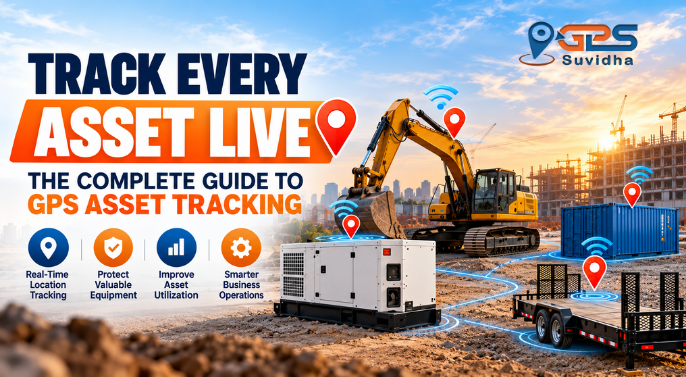
GPS asset tracking helps businesses monitor the location and movement of valuable equipment through a tracking device and tracking software. Depending on the device and service plan, businesses can view location updates, receive movement alerts, review location history, and manage assets across multiple locations.
Whether you manage construction machinery, generators, trailers, shipping containers, or rental equipment, the right asset tracking system can improve visibility and support better operational decisions.
In this guide, we explain how GPS asset tracking works, its key benefits, the features businesses should consider, and how to choose a suitable tracking solution.
What Is GPS Asset Tracking?
GPS asset tracking is a technology that enables businesses to monitor the location and movement of physical assets using GPS-enabled tracking devices and software.
These assets may include construction machinery, generators, trailers, containers, agricultural equipment, and other valuable items that need regular monitoring.
A GPS asset tracking device determines its position using signals from navigation satellites. It then transmits location data through a supported communication network to tracking software, where authorized users can view the information through a web dashboard or mobile application.
For example, a construction company operating across several project sites can use GPS asset tracking to check the latest reported locations of its generators and machinery without relying entirely on phone calls or manual registers.
The main purpose is simple: know where your assets are, identify unexpected movement, and make better use of the equipment you already own.
GPS Asset Tracking vs. Vehicle Tracking
GPS asset tracking and vehicle tracking use similar positioning technology, but they serve different operational requirements.
| Feature | Vehicle Tracking | Asset Tracking |
| Primary purpose | Monitor vehicles and journeys | Monitor equipment and movable assets |
| Common assets | Cars, trucks, buses | Generators, trailers, containers, machinery |
| Power source | Commonly vehicle electrical power | Often an internal battery or external power |
| Installation | Frequently wired into the vehicle | May be attached, mounted, or installed |
| Common features | Location, route history, driving data | Location history, geofencing, movement alerts |
| Main users | Fleet managers and transporters | Asset owners, site managers, rental businesses |
Businesses operating both vehicles and equipment may benefit from using both technologies.
Explore GPS Suvidha’s Vehicle Tracking Solution and Truck GPS Tracking for vehicle-focused monitoring requirements.
How Does GPS Asset Tracking Work?
A GPS asset tracking system combines a tracking device, a communication method, and software that displays location information.
The process generally involves five steps.
1. Install the GPS Tracking Device
A suitable tracking device is attached to or installed on the asset. The installation method depends on the equipment, power availability, mounting requirements, and operating environment.
For assets without a permanent electrical connection, a battery-powered tracker may be appropriate.
2. Determine the Asset’s Location
The device receives signals from GPS satellites to calculate its position. Location performance depends on factors such as antenna placement, surrounding structures, and the device’s capabilities.
3. Transmit Location Data
The tracker sends location information through a supported communication network, commonly a cellular network.
The frequency of updates depends on the device configuration, network availability, and service plan.
4. Monitor Assets Through Tracking Software
The tracking dashboard displays the latest available location. Depending on the system, users may also access movement history, geofencing alerts, battery information, and reports.
5. Take Action Using Tracking Information
Managers can investigate unexpected movement, coordinate equipment transfers, check asset locations, and plan resource allocation using the available tracking data.
Important: GPS positioning and location-data transmission are separate processes. A device may determine its position even when it cannot immediately send an update. Connectivity limitations can therefore cause delays in the information displayed on the dashboard.
8 Key Benefits of GPS Asset Tracking
GPS asset tracking can help businesses improve equipment visibility, strengthen asset management, and make more informed operational decisions.
1. Reduce the Risk of Theft and Loss
Equipment stored at construction sites, warehouses, farms, and remote project locations may be vulnerable to unauthorized movement.
Geofencing allows businesses to create virtual boundaries around approved locations. When a compatible tracker detects movement across a configured boundary, the system can generate an alert.
These alerts help teams investigate unusual activity promptly. GPS tracking cannot guarantee theft prevention, but it can provide useful information for responding to potential incidents.
2. Support Faster Asset Recovery
When equipment goes missing, its last reported location and movement history can help establish where it was last detected.
Businesses may share relevant tracking information with the police or their insurer when appropriate. Recovery depends on several factors, including whether the device remains operational and can transmit location updates.
3. Monitor Assets Across Multiple Locations
Businesses frequently move equipment between construction sites, warehouses, depots, and customer locations.
A centralized tracking dashboard makes it easier to check the latest available location without contacting every site supervisor.
This is especially useful for construction contractors, infrastructure companies, agricultural operations, and equipment rental businesses.
4. Improve Asset Utilization
Knowing where equipment is located helps managers identify assets that may be available for another project.
For example, a contractor may discover that a generator is sitting idle at one site while another site is paying to rent a similar machine. Better location visibility can support more effective equipment allocation.
For a complete utilization picture, GPS location data can be combined with operating-hour records, maintenance information, and project schedules.
5. Reduce Dispatch Delays
When managers know which assets are nearby, they can make faster decisions about equipment deployment and transfers.
This can help coordinate collections, schedule machinery movements, and reduce delays caused by uncertainty about equipment availability.
6. Reduce Manual Record-Keeping
Managing equipment through spreadsheets, paper registers, and repeated phone calls can become difficult as a business grows.
Asset tracking software can consolidate available location information and reports in one place, reducing dependence on manual status checks.
7. Strengthen Accountability
Movement history can help businesses review when an asset left a storage yard or reached a designated location.
When combined with handover records, asset registers, and internal procedures, tracking information can support operational reviews and help resolve disputes.
8. Make Better Equipment Investment Decisions
Tracking information can help managers identify equipment that moves frequently and assets that may be underused.
Although GPS location alone does not measure every aspect of equipment utilization, it can support better decisions when combined with operating-hour records, maintenance information, and project requirements.
Which Assets Should Businesses Track?
GPS asset tracking is particularly useful for assets that are valuable, frequently moved, difficult to replace, or expensive to lose.
Construction Equipment
Excavators, cranes, rollers, concrete mixers, and other mobile machinery may need monitoring across multiple construction and infrastructure sites.
Tracking can help contractors check the latest reported equipment locations and coordinate transfers between projects.
Trailers and Shipping Containers
Detached trailers and movable containers can be difficult to locate when they are spread across storage yards, depots, and distribution locations.
Suitable tracking devices can help businesses improve location visibility without depending solely on the vehicles that transport these assets.
Generators and Compressors
Portable generators and air compressors may operate without a permanent electrical connection. Battery-powered tracking devices can be suitable for these assets, depending on their monitoring requirements.
Agricultural Machinery
Tractors and other movable agricultural equipment may be used across large farms or different operating locations. Tracking can help owners check their latest reported positions and coordinate equipment movement.
Rental Equipment
Equipment rental companies can use tracking to check asset locations, investigate overdue returns, and improve coordination between rental assignments.
Tools and High-Value Equipment
Businesses can evaluate tracking options for valuable mobile tools and specialized equipment. For small or low-value items, RFID, Bluetooth-based systems, or QR-code inventory management may be more cost-effective than GPS.
The best approach is to prioritize assets based on their value, mobility, replacement cost, and risk of loss.
Essential Features to Look for in a GPS Asset Tracking System
Not every GPS asset tracking system offers the same capabilities. Before purchasing a solution, compare the device specifications and software features against your actual business requirements.
| Feature | Why It Matters |
| Location updates | Shows the latest reported asset position |
| Geofencing | Helps identify movement across defined boundaries |
| Movement alerts | Notifies users about selected movement events |
| Tamper alerts | May help identify interference with supported devices |
| Location history | Supports movement reviews and investigations |
| Battery monitoring | Helps identify trackers that need charging or replacement |
| Multiple-asset dashboard | Allows users to monitor several assets together |
| Reports and exports | Supports audits and operational reviews |
| Durable construction | Helps the device suit its working environment |
| Mobile and web access | Allows authorized users to check locations remotely |
| Technical support | Helps with setup, troubleshooting, and ongoing use |
Before making a decision, confirm which features are included in the device and subscription. Not every tracker supports every alert or reporting function.
Types of GPS Asset Tracking Devices
Choosing the right tracking device depends on the asset’s power source, location, movement patterns, and monitoring requirements.
Battery-Powered GPS Trackers
These devices use an internal battery and are suitable for assets without a convenient electrical connection.
Common applications include detached trailers, containers, and portable equipment. Battery performance depends on capacity, reporting frequency, network conditions, temperature, and device settings.
Externally Powered Trackers
These trackers connect to an external power source where available. They may suit powered equipment that requires regular location updates without relying entirely on an internal battery.
Check installation requirements and compatibility before choosing a device.
Rugged Asset Trackers
Assets used outdoors or in industrial environments may require devices designed to withstand dust, moisture, vibration, and temperature changes.
Check the manufacturer’s documented environmental ratings instead of assuming every GPS tracker is suitable for demanding conditions.
How to Choose the Right GPS Asset Tracking System
Selecting a tracking solution requires more than comparing device prices. The right system should match your assets, operating conditions, and business objectives.
Step 1: Identify Your Priority Assets
Create a list of equipment, containers, trailers, and machinery. Record their approximate value, usual location, movement frequency, and replacement cost.
Step 2: Define Your Tracking Requirements
Decide whether your primary goal is theft alerts, location visibility, equipment allocation, or movement records. This will help determine the required device features.
Step 3: Match the Device to the Asset
Check power availability, mounting requirements, durability, battery life, and communication compatibility. Different asset categories may require different devices.
Step 4: Evaluate the Tracking Software
Request a demonstration of the live map, movement history, geofencing, alerts, and reports. Check whether the system supports multiple assets and appropriate user permissions.
Step 5: Verify Coverage and Update Frequency
Ask how the device performs in remote areas, enclosed storage locations, and places with weak cellular connectivity. Confirm what happens when the connection is interrupted.
Step 6: Compare the Total Cost
Consider the cost of hardware, installation, subscriptions, data charges, maintenance, battery replacement, and technical support.
Compare the total cost of ownership rather than choosing a system based only on its initial price.
Step 7: Run a Pilot Before Expanding
Start with a small group of high-priority assets. Test location accuracy, alert delivery, battery performance, and dashboard usability under real operating conditions before deploying the system across your business.
Common GPS Asset Tracking Mistakes to Avoid
Businesses can get more value from tracking technology by avoiding common implementation mistakes.
- Choosing a device based only on price: A low-cost device may not meet your battery, connectivity, or durability requirements.
- Expecting uninterrupted real-time updates: Satellite positioning and communication limitations can cause delayed or missing updates.
- Ignoring battery maintenance: Low battery levels can interrupt tracking. Establish a process for reviewing battery status.
- Installing the tracker incorrectly: Poor placement or an insecure mount can affect performance or increase the risk of removal.
- Failing to assign alert responsibility: Every important alert should have a clear owner and response procedure.
- Ignoring tracking reports: Reviewing movement history and reports regularly helps convert location information into useful operational decisions.
GPS tracking should be part of a broader asset management process that includes equipment identification, access control, maintenance, and documented handovers.
GPS Asset Tracking and Fleet Management Together
Businesses that operate vehicles and equipment often need more than one tracking capability.
Vehicle tracking focuses on trucks, cars, buses, and their journeys. Asset tracking extends location visibility to equipment that may be detached from vehicles or operate without an engine.
Combining these capabilities can help businesses coordinate vehicle movements, equipment transfers, and site operations more effectively.
Explore these related GPS Suvidha services:
- Fleet Management for fleet-related monitoring and coordination.
- Truck GPS Tracking for truck tracking requirements.
- Employee Management for employee location and workforce management.
- GPS Tracking Solutions to explore GPS tracking services.
Why Choose GPS Suvidha for Asset Tracking?
GPS Suvidha Solutions provides GPS-based tracking services for vehicles and other valuable assets. Its asset tracking offering is intended to help businesses monitor equipment location and movement, including assets that may not have a direct electrical connection.
When evaluating GPS Suvidha or any other provider, request a demonstration that reflects your asset types, operating locations, and reporting requirements.
Explore the GPS Suvidha Asset Tracking service or contact the team to discuss your requirements.
Frequently Asked Questions About GPS Asset Tracking
1. What is GPS asset tracking used for?
GPS asset tracking is used to monitor the location and movement of valuable equipment, including generators, construction machinery, trailers, containers, and agricultural equipment. Businesses use it to improve visibility, investigate missing assets, and coordinate equipment allocation.
2. Can GPS track assets without a power supply?
Yes. Battery-powered GPS trackers can monitor assets without a permanent electrical connection. Battery life depends on device specifications, reporting frequency, environmental conditions, and network performance.
3. Does GPS asset tracking work in remote areas?
GPS positioning can work in many remote locations, but transmitting data to a dashboard generally requires a supported communication network. If connectivity is unavailable, updates may be delayed or unavailable until the device reconnects, depending on its capabilities.
4. Can GPS asset tracking help prevent equipment theft?
It can help businesses detect certain unauthorized movements through geofencing and movement alerts. Location history may also support recovery efforts. However, tracking cannot guarantee theft prevention or recovery.
5. What is the difference between GPS asset tracking and RFID tracking?
GPS tracking uses satellite positioning to determine an asset’s location. RFID uses radio-frequency identification to identify or detect tagged items using compatible readers. GPS is often useful for mobile assets over wider areas, while RFID can suit inventory checks and controlled locations.
6. How much does a GPS asset tracking system cost in India?
The cost depends on the number of assets, device type, battery capacity, installation, connectivity, software subscription, and support requirements. Request a quotation based on your assets and required reporting frequency.
7. Can I track multiple assets from one dashboard?
Yes. Many asset tracking platforms support multiple devices on a shared dashboard. Confirm the maximum supported device count, user permissions, reporting capabilities, and subscription terms with your provider.
8. How do I choose the best GPS asset tracking device?
Start by identifying the assets you want to monitor and the problems you need to solve. Compare battery life, location update frequency, connectivity, durability, geofencing, reporting, total cost, and provider support before making a decision.
Conclusion: Track Every Asset With Greater Confidence
Valuable equipment can be difficult to manage when it moves between project sites, warehouses, storage yards, and remote locations. GPS asset tracking gives businesses a practical way to improve location visibility, investigate unexpected movement, and make more informed equipment allocation decisions.
The key is to choose a tracking system that matches your assets, operating conditions, and business goals. Start with your highest-priority equipment, test the system under real working conditions, and expand as your requirements grow.
Want to improve visibility across your valuable equipment?
Explore GPS Suvidha Asset Tracking or contact GPS Suvidha to discuss a suitable tracking solution for your business.