
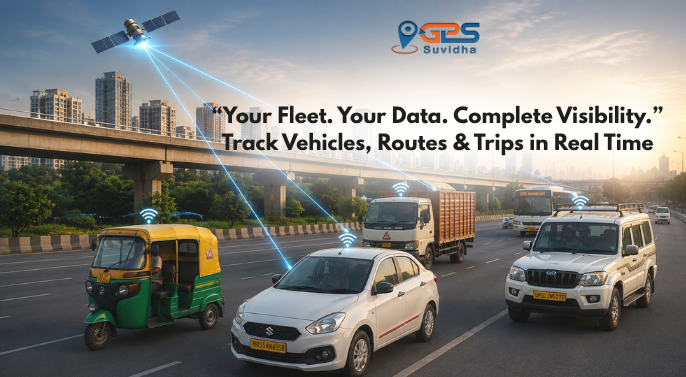
A GPS tracking system for vehicles helps businesses monitor vehicle location, routes, movement, and operational activity through GPS-based technology. For fleet owners and transport managers, it provides better visibility into vehicles, helps monitor trips, supports route planning, and makes fleet operations easier to manage.
What Is a GPS Tracking System for Vehicles?
A GPS tracking system for vehicles is a technology solution that uses GPS positioning and communication networks to determine and transmit a vehicle’s location to a tracking platform.
The information can then be viewed through tracking software, allowing authorized users to monitor vehicles, review routes, receive alerts, and analyze historical movement.
For a business operating several vehicles, this changes fleet management from “Where is the vehicle?” to “What is the vehicle doing, and how can we manage the trip better?”
GPS Suvidha provides GPS-based vehicle and fleet tracking solutions designed to help businesses monitor vehicles and assets and improve operational visibility.
How Does a GPS Vehicle Tracking System Work?
A vehicle tracking system generally combines a GPS tracking device, satellite positioning, mobile communication, and tracking software.
The basic process works like this:
- GPS positioning: The device determines the vehicle’s position using satellite signals.
- Data transmission: Location and other available tracking information are transmitted through a communication network.
- Tracking platform: The information is processed by the tracking system.
- Fleet monitoring: The authorized user can view vehicle information through the tracking interface.
- Reports and alerts: The platform can provide historical reports and configured notifications to support fleet management.
GPS Suvidha describes its vehicle tracking system as using GPS satellite positioning to record vehicle movement and transmitting tracking information through GSM/GPRS to a web-based platform.
What Information Can Vehicle Tracking Provide?
Depending on the tracking device and configuration, a GPS tracking system may provide information such as:
- Current or recent vehicle location
- Route and trip history
- Vehicle movement
- Stops and stoppage duration
- Driver activity
- Speed-related information
- Arrival and departure information
- Geographical zone activity
- Vehicle operating reports
The exact information available depends on the hardware, software, configuration, and service package.
Why Is GPS Tracking Important for Fleet Management?
The biggest advantage of GPS vehicle tracking is visibility.
Without a tracking system, fleet managers may depend heavily on phone calls, driver updates, spreadsheets, or manual records. This makes it harder to understand what is happening across multiple vehicles at the same time.
A centralized tracking system can help businesses:
- Monitor multiple vehicles
- Understand vehicle movement
- Review routes and stops
- Improve trip planning
- Identify unauthorized vehicle usage
- Monitor driver-related activity
- Review historical reports
- Respond faster to operational issues
GPS Suvidha specifically positions its fleet management solution around real-time fleet visibility, reporting, route efficiency, vehicle utilization, and operational decision-making.
7 Key Benefits of a GPS Tracking System for Vehicles
1. Real-Time Vehicle Visibility
Knowing the location of a vehicle can be important when managing deliveries, transportation, field operations, or passenger services.
A GPS tracking system gives fleet managers a digital way to monitor vehicle movement instead of depending entirely on manual location updates.
GPS Suvidha states that its tracking solutions provide real-time vehicle location and status information to support trip planning and fleet monitoring.
2. Better Route Management
Route visibility helps managers understand whether vehicles are following planned routes and identify deviations or unnecessary movement.
For transport and logistics businesses, better route management can support more efficient trip planning and vehicle utilization.
GPS Suvidha’s vehicle tracking solution includes route monitoring and information about route deviations for applicable use cases.
3. Improved Fleet Utilization
A vehicle that spends too much time idle or is used inefficiently can increase operating costs.
Tracking data can help fleet managers review vehicle activity, identify under-utilization, and make better dispatching decisions.
GPS Suvidha’s fleet management information specifically highlights vehicle utilization, dispatching, route efficiency, and reducing operational inefficiencies.
4. Monitoring Driver and Vehicle Activity
Fleet managers may need to understand how vehicles are being used during working hours.
Tracking reports can help review:
- Driving patterns
- Vehicle stops
- Route history
- Working hours
- Arrival and departure times
- Unusual or unauthorized usage
This information can support operational reviews and help businesses establish greater accountability.
5. Faster Response to Operational Problems
When a vehicle is delayed or moves away from an expected route, the ability to identify the issue quickly can make fleet management more responsive.
GPS-based alerts and tracking reports can help managers investigate issues without waiting for manual updates.
GPS Suvidha provides configurable alerts and monitoring capabilities as part of its tracking platform.
6. Better Customer Communication
Customers often want to know when a delivery, service vehicle, or shipment is expected to arrive.
Vehicle tracking can give businesses better visibility into trip progress and expected movement, helping teams provide more informed updates.
GPS Suvidha’s vehicle tracking solutions include delay and trip information designed to help businesses manage deliveries and customer service more effectively.
7. Historical Reports for Better Decisions
GPS tracking is not only about watching a vehicle on a map.
Historical data can help businesses review past trips, stoppages, vehicle activity, and operational patterns.
This creates a useful record that fleet managers can analyze when improving routes, vehicle utilization, driver management, and daily operations.
What Are the Important Features of a Vehicle GPS Tracking System?
Not every tracking system offers the same capabilities. Businesses should evaluate features according to their actual fleet requirements.
| Feature | Why It Matters |
| Live vehicle tracking | Helps monitor current vehicle movement |
| Route history | Allows managers to review completed trips |
| Geofencing | Helps monitor entry into or exit from defined areas |
| Alerts | Provides notifications for selected events |
| Driver monitoring | Supports review of driving-related activity |
| Trip reports | Helps analyze vehicle movement |
| Fleet dashboard | Provides centralized visibility |
| Mobile access | Allows monitoring away from the office |
| Asset tracking | Extends tracking beyond vehicles |
| Historical data | Supports operational analysis |
GPS Suvidha’s published tracking solution includes live vehicle monitoring, route information, alerts, reporting, maps, and fleet-management capabilities.
GPS Tracking System vs Manual Vehicle Monitoring
| Factor | Manual Monitoring | GPS Vehicle Tracking |
| Location updates | Driver-dependent | Digital tracking |
| Multiple vehicles | Difficult to monitor simultaneously | Centralized monitoring |
| Route history | Usually manual | Available through tracking platform |
| Alerts | Manual communication | Configurable alerts |
| Trip analysis | Time-consuming | Tracking reports |
| Fleet visibility | Limited | Greater visibility |
| Operational decisions | Based on limited information | Supported by tracking data |
The difference is especially important as fleet size increases. Calling drivers individually may work for a very small operation, but it becomes inefficient when managers need to coordinate many vehicles simultaneously.
Which Businesses Can Use GPS Vehicle Tracking?
GPS tracking is not limited to trucking companies. Different industries can use vehicle tracking according to their operational needs.
Transport and Logistics
Fleet owners can monitor trucks, routes, trips, and vehicle utilization while improving coordination between dispatch teams and drivers.
School and Passenger Buses
Tracking can provide greater visibility into bus movement, routes, delays, and deviations. GPS Suvidha offers school bus and passenger bus tracking solutions.
Delivery and Distribution
Businesses can monitor delivery vehicles and use trip information to improve scheduling and customer communication.
Taxi and Cab Services
Cab operators can monitor vehicle movement, distance travelled, route progress, and other operational information.
Medical and Emergency Services
Vehicle tracking can help organizations locate vehicles and support faster dispatch decisions. GPS Suvidha describes tracking applications for emergency and ambulance operations.
Mining and Heavy Equipment
GPS-based tracking can also be used for vehicles and heavy equipment where location, operating time, and utilization are important.
Waste Management
Waste collection businesses can monitor vehicle movement and use tracking information to understand collection activity and route efficiency.
How to Choose the Right GPS Tracking System for Vehicles
Choosing a GPS tracking system should start with your operational requirements, not just the number of features advertised.
Before selecting a solution, consider these factors:
1. Number of Vehicles
A solution for five vehicles may have different requirements from a platform managing hundreds of trucks.
2. Type of Vehicles
Cars, trucks, buses, trailers, construction equipment, and other assets may require different tracking hardware or configurations.
3. Tracking Requirements
Determine whether you need:
- Location monitoring
- Route history
- Driver monitoring
- Geofencing
- Alerts
- Reports
- Asset tracking
- Mobile access
4. Software Usability
A technically capable system is only useful if fleet managers can understand and use the information easily.
Look for a dashboard that makes important information accessible without unnecessary complexity.
5. Reporting
Reports should help answer practical business questions:
- Where did the vehicle travel?
- How long did the trip take?
- Where did it stop?
- Was the planned route followed?
- When did the vehicle arrive?
- How is the vehicle being utilized?
6. Hardware and Installation
Check device compatibility, installation requirements, connectivity, power requirements, and maintenance support before deployment.
7. Customer Support
GPS tracking becomes part of daily fleet operations, so technical assistance and service support should be considered alongside hardware and software.
How GPS Suvidha Helps Businesses Track Vehicles
GPS Suvidha provides GPS tracking solutions, vehicle tracking, fleet management, and asset tracking services for different operational requirements.
Its published solutions include vehicle location monitoring, route tracking, alerts, reports, fleet visibility, and tools designed to help businesses improve vehicle utilization and operational efficiency.
The platform is positioned for multiple applications, including:
- Transport and logistics
- Commercial fleets
- School buses
- Passenger buses
- Tourist cabs
- Medical emergency vehicles
- Mining operations
- Waste management
- Supply and distribution
- Heavy machinery
This broader application makes vehicle tracking useful beyond simply knowing where a truck is.
GPS Suvidha helps businesses turn vehicle movement data into practical fleet-management information.
Explore GPS Suvidha GPS Tracking Solutions
Businesses looking for a dedicated vehicle monitoring solution can explore the GPS Suvidha tracking platform and identify the features relevant to their fleet.
Explore GPS Suvidha GPS Tracking Solutions
What Makes GPS Tracking Valuable for Fleet Owners?
The value of GPS tracking is not simply the ability to see a vehicle moving on a map.
The more important benefit is the operational visibility created by tracking data.
For example, a fleet manager can use vehicle movement information to identify route deviations, review stoppages, monitor vehicle utilization, understand delays, and improve dispatch decisions.
This makes GPS tracking a fleet-management tool rather than just a location-monitoring device.
For fleet owners, GPS tracking can connect vehicle location, route information, alerts, and historical reports in one operational view.
Is GPS Tracking Worth It for a Small Fleet?
Yes, but the business case depends on how the vehicles are used.
A small fleet may still benefit from tracking when vehicles carry valuable goods, operate across multiple locations, require regular customer deliveries, or need closer control over routes and usage.
For a very small fleet with simple operations, the required feature set may be lower than that of a large logistics company.
The right approach is to choose a tracking solution based on business risk, fleet activity, operating area, and management requirements rather than fleet size alone.
GPS Tracking and Fleet Management: What’s the Difference?
GPS tracking primarily provides information about where a vehicle is and how it has moved.
Fleet management is broader. It uses vehicle information to manage operations, including dispatch, routes, utilization, drivers, maintenance, costs, and service performance.
In practice, GPS tracking can become one of the data foundations of a wider fleet-management process.
GPS Suvidha combines vehicle tracking with fleet-management capabilities aimed at helping businesses monitor vehicles, analyze activity, and make operational decisions.
Frequently Asked Questions About GPS Tracking Systems
A GPS tracking system for vehicles uses GPS positioning technology and communication networks to determine and transmit vehicle location information to a tracking platform. Businesses can use the platform to monitor vehicle movement, review routes, receive alerts, and analyze historical tracking information.
A GPS tracking device receives positioning information from satellites and transmits relevant data through a communication network to a tracking platform. Authorized users can then access the information through tracking software to monitor vehicles, review movement, and use available reports and alerts.
The main benefits include better vehicle visibility, route monitoring, fleet coordination, historical trip information, configurable alerts, and improved operational decision-making. For businesses with multiple vehicles, centralized tracking can reduce dependence on manual location updates.
Yes. Fleet tracking platforms can be designed to monitor multiple vehicles from a centralized interface. GPS Suvidha provides fleet-management and vehicle-tracking solutions intended to help businesses monitor and manage multiple vehicles and assets.
GPS tracking can help identify operational patterns such as unnecessary movement, inefficient routes, and excessive idling where the tracking system supports those measurements. However, the actual fuel savings depend on fleet behavior, route planning, vehicle condition, driver practices, and how the business acts on tracking data.
Yes. Truck operators can use GPS tracking to monitor truck locations, routes, stops, driver activity, and trip progress. GPS Suvidha specifically provides truck GPS tracking and fleet-monitoring solutions for transportation and logistics operations.
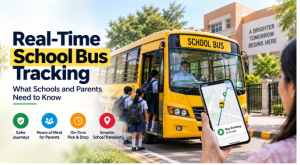
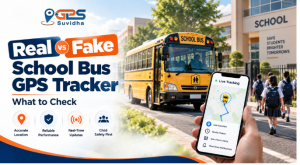
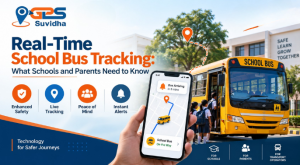
Yes. GPS tracking can provide visibility into school bus movement, routes, delays, and deviations. GPS Suvidha lists school bus tracking among its vehicle-tracking applications.
Look at the tracking accuracy and update behavior, device compatibility, network connectivity, dashboard usability, reports, alerts, geofencing capabilities, installation, support, and overall suitability for your fleet. Avoid choosing a system based only on the number of features listed.
Conclusion
A GPS tracking system for vehicles gives businesses a clearer view of vehicle movement and helps turn location data into useful operational information.
For fleet owners, transport managers, logistics companies, and other vehicle-dependent businesses, tracking can support better route management, vehicle utilization, monitoring, reporting, and customer communication.
The best GPS tracking solution is not necessarily the one with the longest feature list. It is the one that fits the organization’s vehicles, operating conditions, management process, and business objectives.
GPS Suvidha provides vehicle tracking, fleet management, truck tracking, school bus tracking, passenger transport tracking, and asset tracking solutions for different operational requirements.