
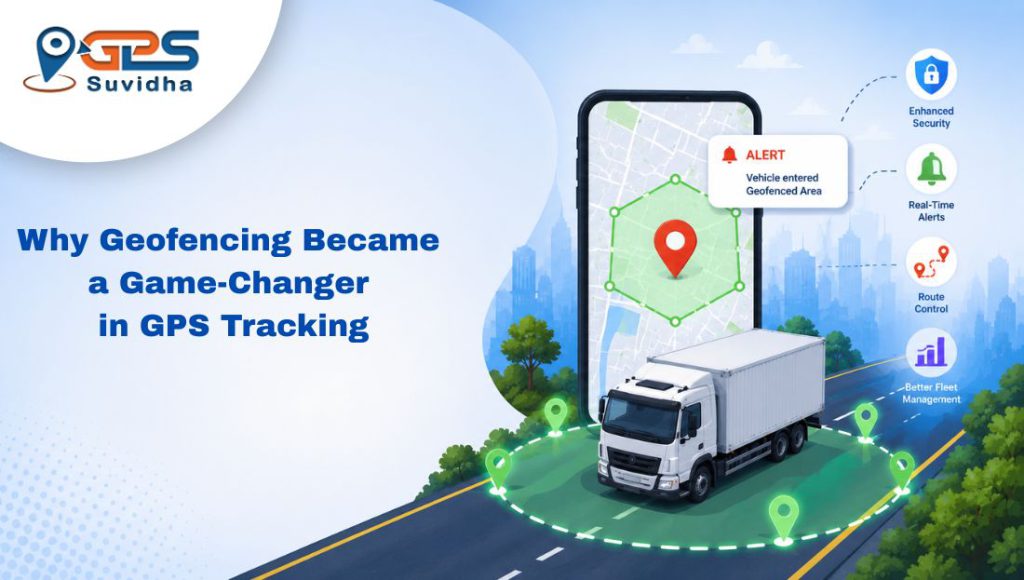
As GPS Tracking technology continued improving, businesses and vehicle owners started looking for smarter ways to monitor vehicles and manage operations more efficiently. One feature that became highly important over time was Geofencing.
Geofencing added an extra layer of automation and control to GPS Tracking Systems by allowing users to create virtual boundaries around specific locations. Whenever a vehicle entered or exited those predefined areas, the system automatically generated alerts and updates.
Today, many businesses use Geofencing in GPS Tracking to improve vehicle security, fleet management, operational monitoring, and route control.
What is Geofencing in GPS Tracking?
Geofencing is a location-based feature used in GPS Tracking Systems.
It allows users to create virtual boundaries around locations such as:
- Warehouses
- Offices
- Delivery zones
- Parking areas
- Restricted locations
When a tracked vehicle enters or leaves the selected area, the system automatically sends alerts or notifications.
This helps businesses and vehicle owners monitor vehicle movement more efficiently.
Why Geofencing Became Important in GPS Tracking
First, it improved operational visibility
Before Geofencing, businesses often depended on manual updates to know whether vehicles had reached specific locations.
This process was time-consuming and less accurate.
With GPS Tracking and geofencing, businesses now receive automatic alerts whenever vehicles:
- Enter a location
- Leave a location
- Stay longer than expected
This improved operational visibility and monitoring.
Fleet management studies show that automated location-based monitoring improves operational coordination and efficiency.
Vehicle security became stronger
One major reason geofencing became popular was improved security.
Businesses and vehicle owners can create restricted zones and receive alerts if a vehicle moves unexpectedly.
This helps improve:
- Theft monitoring
- Unauthorized vehicle usage detection
- Emergency response
Because of this, geofencing became an important security feature in GPS Vehicle Tracking systems.
Delivery and logistics management improved
Logistics and delivery businesses started using Geofencing to monitor delivery activity more accurately.
For example, businesses can automatically know when:
- A delivery vehicle reaches a customer location
- A truck exits a warehouse
- A shipment enters a delivery zone
This improves delivery coordination and operational efficiency.
Today, many logistics companies use Real-Time GPS Tracking with geofencing to manage large delivery operations.
Route monitoring became easier
Before geofencing, monitoring whether drivers followed assigned routes was difficult.
However, geofencing introduced better route visibility.
Businesses can now create designated route zones and receive alerts if vehicles:
- Leave approved routes
- Enter restricted areas
- Experience unexpected movement
This helps improve operational control and route management.
Manual communication has reduced significantly
Earlier, businesses often relied on phone calls to confirm vehicle arrival or departure.
This created:
- Delays
- Communication gaps
- Extra manual work
With GPS Tracking Systems, geofencing automates these updates through instant alerts and notifications.
As a result, businesses can manage operations more efficiently.
School transportation monitoring has improved
Schools and transport providers also started using Geofencing in GPS Tracking.
For example, schools can receive alerts when:
- School buses enter the school premises
- Buses leave the pickup zones
- Vehicles reach student drop locations
This improves transportation visibility and student safety monitoring.
Personal vehicle owners also benefited
Geofencing is not limited to businesses.
Many personal vehicle owners use geofencing features for:
- Parking alerts
- Vehicle movement notifications
- Family safety monitoring
- Theft protection
This helps improve vehicle visibility and peace of mind.
Also Read:- Why GPS Tracking Became Essential for E-commerce Deliveries
Why Geofencing is Growing Rapidly in India
In India, transportation operations often face challenges such as:
- Heavy traffic
- Large delivery networks
- Long travel distances
- Increasing security concerns
Because of these challenges, businesses are increasingly adopting GPS Tracking with geofencing features.
Today, geofencing plays an important role in improving fleet visibility, operational monitoring, and transportation efficiency across India.
How GPS Suvidha Helps with Geofencing and GPS Tracking
Modern solutions like GPS Suvidha help businesses and vehicle owners use geofencing more effectively.
With GPS Suvidha, users can:
- Create virtual location boundaries
- Receive real-time entry and exit alerts
- Monitor vehicle movement live
- Improve route and operational control
This helps businesses reduce manual monitoring and improve operational efficiency.
Instead of depending on assumptions or delayed communication, users receive accurate, real-time alerts and updates.
When Should Businesses Use Geofencing?
Businesses and vehicle owners should consider Geofencing in GPS Tracking if they want to:
- Improve vehicle security
- Monitor route activity
- Receive automatic location alerts
- Improve fleet visibility
- Reduce manual tracking efforts
The earlier geofencing systems are implemented, the easier it becomes to manage transportation and operations efficiently.
Looking for Better Control and Monitoring with GPS Tracking?
If you want better operational visibility, improved security, and smarter location-based monitoring, geofencing can be a practical solution.
With solutions like GPS Suvidha, businesses and vehicle owners get real-time tracking, geofencing alerts, and easy-to-use tools that simplify transportation management.
Instead of relying on manual updates, users can monitor vehicle activity using accurate real-time information.
Frequently Asked Questions
Geofencing is a feature that creates virtual boundaries and sends alerts when vehicles enter or leave selected areas.
Geofencing improves operational visibility, vehicle security, and automated monitoring.
Yes. Geofencing helps businesses monitor routes, deliveries, and vehicle movement more efficiently.
Yes. Personal users use geofencing for safety alerts, parking notifications, and theft monitoring.